


2026 Programme
These are the sessions that will shape Weekend of Mistakes 2026 — and we’re excited to say the programme is now finalised. We’re still adding brilliant speakers and weaving in timely, topical twists, so there’s plenty more to look forward to as we build toward the weekend.
Please don’t forget to choose your sessions by 17th March 2026 so we can make sure everything runs smoothly.
A photographer and a film crew will be present at this event. If you do not wish to be photographed or filmed, please let a member of staff know and they will direct you to appropriate seating.
- Day 1Friday 20th March
- Day 2Saturday 21st March
- Day 3Sunday 22nd March
-
16:00 - 17:00Get ready for the weekend with our expert panel, including investment strategist and consultant Tom Elliott, Weekend of Mistakes Co-Director Paul…Get ready for the weekend with our expert panel, including investment strategist and consultant Tom Elliott, Weekend of Mistakes Co-Director Paul Greatbatch, and Theodora Zemek, former fixed-income fund manager and current non-executive director on…
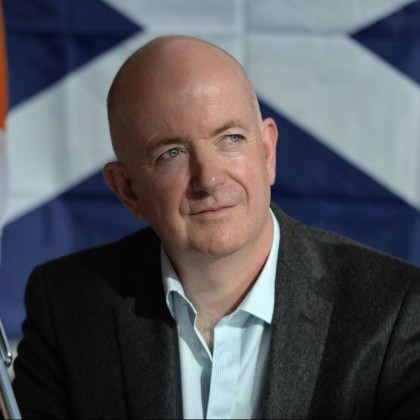 CHAIR: David Clarke
David Clarke
David Clarke CFA is CEO of Didasko Education Company, the charity behind the Library of Mistakes, Practical History of Financial Markets courses, Future Asset and Leavers’ Money Skills.
After studying philosophy at Trinity College Dublin, he joined the Bloomberg News team in 2000, reporting on Europe’s burgeoning investment management industry. Later posts saw him as editor-at-large for EMEA news sales and editor for bonds and foreign exchange.
After completing his CFA exams he focused on communications for the investment industry, working for a number of well-known investment and wealth management houses. He has also run marketing teams in the wider financial information sector.
A keen supporter of the finance industry and the good that it can do, he has been involved for many years in encouraging the development of Scotland’s investment sector and its international links, particularly with Ireland, and was until recently chairman of the CFA society in Scotland.
He joined Didasko Education in 2022 as its first CEO, overseeing its expanded portfolio of activities in events and media., increased commercial operations and also its plans to develop more libraries around the world.
He is an accomplished musician, and worked in entertainment in his early 20s. He is also a strong supporter of international cooperation and is chairman of the European Movement in Scotland and a board member of European Movement UK.
 Theodora Zemek
Theodora Zemek
Theodora Zemek has had a 40 year career in the City, largely in fixed income investment. She has managed portfolios for central banks, insurance and pensions companies and retail investors. She was formerly a Non Exec for BlackRock Fund Managers
Prior to her retirement, she was Global Head of Fixed Income for Axa Investment Managers, responsible for Euros 385 billion in assets.. She established the fixed income divisions of M and G Investment Management (1992) and New Star Asset Management (2001), having launched the first UK Corporate Bond unit trust and the first UK High Yield Corporate Bond Fund.
Theo received her PhD in History from Cambridge in 1985, with a thesis on the the influence of the Scottish Enlightenment (Smith and Ferguson) in France.
 Tom Elliott
Tom Elliott
Tom Elliott is an investment consultant, helping multi-asset management companies with their asset allocation decisions. Tom previously worked for the Mattioli Woods Group as a Senior Strategist, and at JP Morgan Asset Management in London for 18 years, leaving at Executive Director level. Before that he worked for four years as a company analyst, for stockbrokers Greig Middleton and Co.
Tom is also a visiting lecturer at King’s College (London University), in the department of political economy. He has a Master’s degree in Economic History from the London School of Economics, and a degree in History from the University of Sussex.
 Paul Greatbatch
Paul Greatbatch
Paul Greatbatch was a Partner & Portfolio Manager at Genesis Investment Management from 1994-2013, one the oldest specialist managers operating in Emerging Markets on behalf of large institutional clients
16:00 - 17:00A Jargon Buster for the Curious. Bring your questions.
Get ready for the weekend with our expert panel, including investment strategist and consultant Tom Elliott, Weekend of Mistakes Co-Director Paul Greatbatch, and Theodora Zemek, former fixed-income fund manager and current non-executive director on BlackRock boards — ably assisted by the interns of King’s College London. This session will be chaired by David Clarke CFA, CEO of Didasko Education Company, the charity behind the Library of Mistakes.
In this relaxed refresher, there really is no such thing as a stupid question. Whether you want to unpick the difference between debt, deficit, and default, explore the quirks of GDP, get interest rates straight, or recap the story of Adam Smith and his miraculous invisible hand, they’ll bring you up to speed with clear explanations and robust real-world examples.
CHAIR: David ClarkeDavid Clarke
David Clarke CFA is CEO of Didasko Education Company, the charity behind the Library of Mistakes, Practical History of Financial Markets courses, Future Asset and Leavers’ Money Skills.
After studying philosophy at Trinity College Dublin, he joined the Bloomberg News team in 2000, reporting on Europe’s burgeoning investment management industry. Later posts saw him as editor-at-large for EMEA news sales and editor for bonds and foreign exchange.
After completing his CFA exams he focused on communications for the investment industry, working for a number of well-known investment and wealth management houses. He has also run marketing teams in the wider financial information sector.
A keen supporter of the finance industry and the good that it can do, he has been involved for many years in encouraging the development of Scotland’s investment sector and its international links, particularly with Ireland, and was until recently chairman of the CFA society in Scotland.
He joined Didasko Education in 2022 as its first CEO, overseeing its expanded portfolio of activities in events and media., increased commercial operations and also its plans to develop more libraries around the world.
He is an accomplished musician, and worked in entertainment in his early 20s. He is also a strong supporter of international cooperation and is chairman of the European Movement in Scotland and a board member of European Movement UK.
Theodora ZemekTheodora Zemek
Theodora Zemek has had a 40 year career in the City, largely in fixed income investment. She has managed portfolios for central banks, insurance and pensions companies and retail investors. She was formerly a Non Exec for BlackRock Fund Managers
Prior to her retirement, she was Global Head of Fixed Income for Axa Investment Managers, responsible for Euros 385 billion in assets.. She established the fixed income divisions of M and G Investment Management (1992) and New Star Asset Management (2001), having launched the first UK Corporate Bond unit trust and the first UK High Yield Corporate Bond Fund.
Theo received her PhD in History from Cambridge in 1985, with a thesis on the the influence of the Scottish Enlightenment (Smith and Ferguson) in France.
Tom ElliottTom Elliott
Tom Elliott is an investment consultant, helping multi-asset management companies with their asset allocation decisions. Tom previously worked for the Mattioli Woods Group as a Senior Strategist, and at JP Morgan Asset Management in London for 18 years, leaving at Executive Director level. Before that he worked for four years as a company analyst, for stockbrokers Greig Middleton and Co.
Tom is also a visiting lecturer at King’s College (London University), in the department of political economy. He has a Master’s degree in Economic History from the London School of Economics, and a degree in History from the University of Sussex.
Paul GreatbatchPaul Greatbatch
Paul Greatbatch was a Partner & Portfolio Manager at Genesis Investment Management from 1994-2013, one the oldest specialist managers operating in Emerging Markets on behalf of large institutional clients
Great Hall17:30 - 18:15Welcome Drinks in the Great Hall for all participants in the full-weekend programme.Welcome Drinks in the Great Hall for all participants in the full-weekend programme.Great Hall17:30 - 18:15Welcome Drinks in the Great Hall for all participants in the full-weekend programme.
18:30 - 19:45For centuries we’ve trusted in the force that Adam Smith famously described as the “invisible hand” to balance markets, restrain excess, and…For centuries we’ve trusted in the force that Adam Smith famously described as the “invisible hand” to balance markets, restrain excess, and deliver shared prosperity. But has it? In 2026, we celebrate the 250th anniversary of Smith’s Wealth of… CHAIR: Nick Butler
Nick Butler
Nick Butler is an energy economist and Visiting Professor in the Policy Institute at Kings College London. He was Group Vice President for Strategy and Policy at BP from 2002 to 2007 and subsequent senior policy adviser to Prime Minister Gordon Brown.
 Jesse Norman MP
Jesse Norman MP
Jesse Norman has been the Member of Parliament for Hereford and South Herefordshire since 2010, and serves as Shadow Leader of the House of Commons. Among his Ministerial roles he served as Paymaster General and Financial Secretary to the Treasury.
He is a Quondam Fellow of All Souls College, Oxford and has written numerous books including Adam Smith: What he Thought and Why it Matters (2018) and a novel about betrayal and revenge at the turn of the 17th century, The Winding Stair (2023), which he is presently adapting for the stage. Mona Siddiqui
Mona Siddiqui
Mona Siddiqui, OBE is Professor of Religion and Society at Kings College, London. She is a regular commentator in the media, known especially for her appearances on BBC Radio 4 and BBC Radio Scotland’s Thought for the Day as well as BBC Radio 4’s The Moral Maze. In 2012, she appeared as a guest on Radio 4’s Desert Island Discs. She has published widely in the area of Christian -Muslim studies and Islamic law and ethics. She is an elected Fellow of the American Academy of Arts and Sciences, The Royal Society of Edinburgh and an advisor to the Rajaratnam School of International Studies, Nanyang Technological University in Singapore.
 Professor the Baroness Alison Wolf DBE
Professor the Baroness Alison Wolf DBE
Professor the Baroness Alison Wolf DBE is the Sir Roy Griffiths Professor of Public Sector Management at King’s College London. She sits as a cross-bench peer (Baroness Wolf of Dulwich) in the UK House of Lords. She specialises in the relationship between education and the labour market. She was the founding Chair of Governors of King’s College London Mathematics School, and remains a governor and vice-chair, and she is a trustee of the University Maths Schools Network.
Alison Wolf served in the No 10 Policy Unit, as a part-time expert adviser on skills and workforce to the UK Prime Minister, from February 2020 to February 2023. She was a panel member for the ‘Augar Review’: the independent Review of Post-18 Education and Funding chaired by Sir Philip Augar, which reported in 2019. In March 2011 she completed the Wolf Report which led to major reforms in vocational education for 14-18 year olds, and she was also a member of the Sainsbury Review which led to the creation of T-levels. Publications include The XX Factor and Does Education Matter?
18:30 - 19:45THE BIG DEBATE: HAS THE INVISIBLE HAND LED US ASTRAY? CELEBRATING THE 250th ANNIVERSARY OF ADAM SMITH’S ‘WEALTH OF NATIONS’?
For centuries we’ve trusted in the force that Adam Smith famously described as the “invisible hand” to balance markets, restrain excess, and deliver shared prosperity. But has it?
In 2026, we celebrate the 250th anniversary of Smith’s Wealth of Nations, one of the most foundational works in the history of economic thought with Jesse Norman MP, author of Adam Smith: What He Thought, and Why It Matters Professor the Baroness Alison Wolf cross-bench peer (Baroness Wolf of Dulwich) in the UK House of Lords and Mona Siddiqui OBE, Professor of Religion and Society at Kings College, London. This is a debate about what markets have really delivered — astonishing prosperity for some, rising division for others, and a fracture line running through modern society.
In this Friday night keynote debate, chaired by Nick Butler, distinguished voices take opposing views on the legacy — and limits — of market forces. Expect a rich journey through economic history, bold claims, pointed counterarguments, and the chance to cast your own vote on who has made the more convincing case.
CHAIR: Nick ButlerNick Butler
Nick Butler is an energy economist and Visiting Professor in the Policy Institute at Kings College London. He was Group Vice President for Strategy and Policy at BP from 2002 to 2007 and subsequent senior policy adviser to Prime Minister Gordon Brown.
Jesse Norman MPJesse Norman MP
Jesse Norman has been the Member of Parliament for Hereford and South Herefordshire since 2010, and serves as Shadow Leader of the House of Commons. Among his Ministerial roles he served as Paymaster General and Financial Secretary to the Treasury.
He is a Quondam Fellow of All Souls College, Oxford and has written numerous books including Adam Smith: What he Thought and Why it Matters (2018) and a novel about betrayal and revenge at the turn of the 17th century, The Winding Stair (2023), which he is presently adapting for the stage.
Mona SiddiquiMona Siddiqui
Mona Siddiqui, OBE is Professor of Religion and Society at Kings College, London. She is a regular commentator in the media, known especially for her appearances on BBC Radio 4 and BBC Radio Scotland’s Thought for the Day as well as BBC Radio 4’s The Moral Maze. In 2012, she appeared as a guest on Radio 4’s Desert Island Discs. She has published widely in the area of Christian -Muslim studies and Islamic law and ethics. She is an elected Fellow of the American Academy of Arts and Sciences, The Royal Society of Edinburgh and an advisor to the Rajaratnam School of International Studies, Nanyang Technological University in Singapore.
Professor the Baroness Alison Wolf DBEProfessor the Baroness Alison Wolf DBE
Professor the Baroness Alison Wolf DBE is the Sir Roy Griffiths Professor of Public Sector Management at King’s College London. She sits as a cross-bench peer (Baroness Wolf of Dulwich) in the UK House of Lords. She specialises in the relationship between education and the labour market. She was the founding Chair of Governors of King’s College London Mathematics School, and remains a governor and vice-chair, and she is a trustee of the University Maths Schools Network.
Alison Wolf served in the No 10 Policy Unit, as a part-time expert adviser on skills and workforce to the UK Prime Minister, from February 2020 to February 2023. She was a panel member for the ‘Augar Review’: the independent Review of Post-18 Education and Funding chaired by Sir Philip Augar, which reported in 2019. In March 2011 she completed the Wolf Report which led to major reforms in vocational education for 14-18 year olds, and she was also a member of the Sainsbury Review which led to the creation of T-levels. Publications include The XX Factor and Does Education Matter?
[Speakers and Weekend of Mistakes Patrons Only] -
[Breakfast Event - Patrons & Premium only]08:15 - 9:15Stablecoins are having a moment. What began as a tool for crypto traders is now being talked about as global financial infrastructure. Crypto…Stablecoins are having a moment. What began as a tool for crypto traders is now being talked about as global financial infrastructure. Crypto enthusiasts argue that stablecoins — cryptocurrencies backed by fiat currency — could finally turn a…
CHAIR: Paul Greatbatch
Paul Greatbatch
Paul Greatbatch was a Partner & Portfolio Manager at Genesis Investment Management from 1994-2013, one the oldest specialist managers operating in Emerging Markets on behalf of large institutional clients
 Izabella Kaminska
Izabella Kaminska
Izabella Kaminska is the founder and editor of The Blind Spot, a new media venture that aims to shine a light on stories being missed by the wider journalistic pack. The site focuses on finance, market, and media news in both short and long form. It hopes to deliver a healthy mix of analysis and opinion-led commentary, supported by aggregation, news reporting and deep dives.
In February 2023, she also became Politico Europe’s senior finance editor, overseeing the growth of Politico’s financial coverage on a part-time basis, in a deal that secured a special licensing agreement for the distribution of Politico content on The Blind Spot. She continues to author her weekly newsletter at The Blind Spot.
Izabella is an alumnus of the Financial Times, where she spent 13 years in reporting roles, most recently as the editor of FT Alphaville, the Financial Times’s award-winning markets and finance blog. Izabella was also an FT columnist and opinion writer focused on tech, finance, and markets. She has also written as a freelancer for Bloomberg, Boat International, and Public News.
Izabella started her journalistic career in 2001 as a junior reporter for the English-language newspaper the Warsaw Business Journal. She later spent time in the former Soviet Union at the Caspian Business News, which took her to Azerbaijan and Georgia. In 2003 she reported as a freelancer from Kabul, Afghanistan, before joining BP as an Associate Editor of the company’s internal magazine Horizon in 2004.After completing the 2005 Reuters graduate trainee program, Izabella joined Platts to focus on the reporting of European natural gas markets. She then went on to become a senior producer at CNBC in London, producing the channel’s flagship program Squawk Box.
With The Blind Spot Izabella is initiating a two-part plan to try to reconfigure how journalistic information is organized on the Internet.
 Russell Napier
Russell Napier
Russell Napier is author of The Solid Ground investment report for institutional investors and co-founder of the investment research portal ERIC- a business he now co-owns with D.C. Thomson. Russell has worked in the investment business for 35 years and has been advising global institutional investors on asset allocation since 1995. Russell is author of the book Anatomy of The Bear: Lessons From Wall Street’s Four Great Bottoms ( in print for almost twenty years and ‘a cult classic’ according to the FT) and is founder and course director of The Practical History of Financial Markets course. The course has run since 2004 and is now available on campus at Edinburgh Business School, in a two and a half day in-person executive version in London and also online.
He is a member of the investment advisory committees of three fund management companies, Cerno Capital, Kennox Asset Management and Bay Capital. He is part owner of both Cerno and Kennox.
In 2014 Russell founded the charitable venture The Library of Mistakes a business and financial history library in Edinburgh that now has branches in India and Switzerland. Plans to open libraries in London, Singapore, Toronto and Mumbai are progressing. The Library of Mistakes hosts lectures which are live streamed and recorded and a podcast series was launched in 2022. The Library and the course are owned and operated by a Scottish registered charity called Didasko which donates its financial surpluses to promote financial education.
Russell has degrees in law from Queen’s University Belfast and Magdalene College Cambridge. He is a Fellow of The CFA Society of the UK , an Honorary Fellow of the CISI and is an Honorary Professor at The University of Stirling and a Visiting Professor at Heriot Watt University. His second book – The Asian Financial Crisis 1995-1998: Birth of the Age of Debt- was published in July 2021.
[Breakfast Event - Patrons & Premium only]08:15 - 9:15Stablecoins - delusional global demand for US dollars and US debt?
Stablecoins are having a moment. What began as a tool for crypto traders is now being talked about as global financial infrastructure. Crypto enthusiasts argue that stablecoins — cryptocurrencies backed by fiat currency — could finally turn a volatile asset class into trusted money for payments, settlement and savings. So what would then be the point of bitcoin - or its 10,000-or-so look-alike friends in the private crypto-world?
Pro-crypto US Treasury Secretary Scott Bessent reckons surging global demand for stablecoins will generate insatiable demand for US Treasury bonds — reinforcing dollar dominance and handily lowering the cost of US government borrowing.
History suggests it may not be so simple. Even though some people are desperate for dollars, as private digital money scales up and starts to intersect with public balance sheets, uncomfortable questions follow - and the other traditional factors which decide what constitutes a reserve currency may determine just how many dollars the world wants to hold.
We have an expert panel including Izabella Kaminska, founder and editor of The Blind Spot, Russell Napier author of the cult classic Anatomy of The Bear: Lessons From Wall Street’s Four Great Bottoms and chaired by Paul Greatbatch Join them for a clear-eyed look at stablecoins — where the hype is justified, where it isn’t, and why “stable” can sometimes sound like just another ex-property developer’s promise.
CHAIR: Paul GreatbatchPaul Greatbatch
Paul Greatbatch was a Partner & Portfolio Manager at Genesis Investment Management from 1994-2013, one the oldest specialist managers operating in Emerging Markets on behalf of large institutional clients
Izabella KaminskaIzabella Kaminska
Izabella Kaminska is the founder and editor of The Blind Spot, a new media venture that aims to shine a light on stories being missed by the wider journalistic pack. The site focuses on finance, market, and media news in both short and long form. It hopes to deliver a healthy mix of analysis and opinion-led commentary, supported by aggregation, news reporting and deep dives.
In February 2023, she also became Politico Europe’s senior finance editor, overseeing the growth of Politico’s financial coverage on a part-time basis, in a deal that secured a special licensing agreement for the distribution of Politico content on The Blind Spot. She continues to author her weekly newsletter at The Blind Spot.
Izabella is an alumnus of the Financial Times, where she spent 13 years in reporting roles, most recently as the editor of FT Alphaville, the Financial Times’s award-winning markets and finance blog. Izabella was also an FT columnist and opinion writer focused on tech, finance, and markets. She has also written as a freelancer for Bloomberg, Boat International, and Public News.
Izabella started her journalistic career in 2001 as a junior reporter for the English-language newspaper the Warsaw Business Journal. She later spent time in the former Soviet Union at the Caspian Business News, which took her to Azerbaijan and Georgia. In 2003 she reported as a freelancer from Kabul, Afghanistan, before joining BP as an Associate Editor of the company’s internal magazine Horizon in 2004.After completing the 2005 Reuters graduate trainee program, Izabella joined Platts to focus on the reporting of European natural gas markets. She then went on to become a senior producer at CNBC in London, producing the channel’s flagship program Squawk Box.
With The Blind Spot Izabella is initiating a two-part plan to try to reconfigure how journalistic information is organized on the Internet.
Russell NapierRussell Napier
Russell Napier is author of The Solid Ground investment report for institutional investors and co-founder of the investment research portal ERIC- a business he now co-owns with D.C. Thomson. Russell has worked in the investment business for 35 years and has been advising global institutional investors on asset allocation since 1995. Russell is author of the book Anatomy of The Bear: Lessons From Wall Street’s Four Great Bottoms ( in print for almost twenty years and ‘a cult classic’ according to the FT) and is founder and course director of The Practical History of Financial Markets course. The course has run since 2004 and is now available on campus at Edinburgh Business School, in a two and a half day in-person executive version in London and also online.
He is a member of the investment advisory committees of three fund management companies, Cerno Capital, Kennox Asset Management and Bay Capital. He is part owner of both Cerno and Kennox.
In 2014 Russell founded the charitable venture The Library of Mistakes a business and financial history library in Edinburgh that now has branches in India and Switzerland. Plans to open libraries in London, Singapore, Toronto and Mumbai are progressing. The Library of Mistakes hosts lectures which are live streamed and recorded and a podcast series was launched in 2022. The Library and the course are owned and operated by a Scottish registered charity called Didasko which donates its financial surpluses to promote financial education.
Russell has degrees in law from Queen’s University Belfast and Magdalene College Cambridge. He is a Fellow of The CFA Society of the UK , an Honorary Fellow of the CISI and is an Honorary Professor at The University of Stirling and a Visiting Professor at Heriot Watt University. His second book – The Asian Financial Crisis 1995-1998: Birth of the Age of Debt- was published in July 2021.
09:30 - 10:25For as long as humans have farmed and traded, fought and governed, they have taken on — and imposed — obligations. Debt is one of civilisation’s…For as long as humans have farmed and traded, fought and governed, they have taken on — and imposed — obligations. Debt is one of civilisation’s oldest tools and oldest burdens: a promise, a punishment, a bond, and sometimes a shackle. We trace… CHAIR: Alice Sherwood
Alice Sherwood
Alice Sherwood is the Co-Director of the Weekend of Mistakes. She is the author of the award-winning Authenticity: Reclaiming Reality in a Counterfeit Culture (HarperCollins 2022), which argues that although our counterfeit culture is shaped by the most powerful forces of economics, evolution, and technology, we can still come together to reclaim reality. Currently a Visiting Senior Research Fellow at The Policy Institute at King’s College London, she has been a director of an open-source intelligence company, worked as a management consultant for Accenture, in retail strategy consultancy and private equity, and for the BBC in education and multimedia. She has under-graduate degrees in philosophy and in chemistry, an MBA from INSEAD, and an MA in literary criticism and narrative non-fiction. She is a trustee of the Hay Castle Trust, chair of the Beit Scientific Fellowship at Imperial Colleget, chair of the Rising Tide women’s network, and lives in London and Wales. Authenticity is Alice’s first book. It won a Royal Society of Literature Giles St Aubyn Award for Non-Fiction.
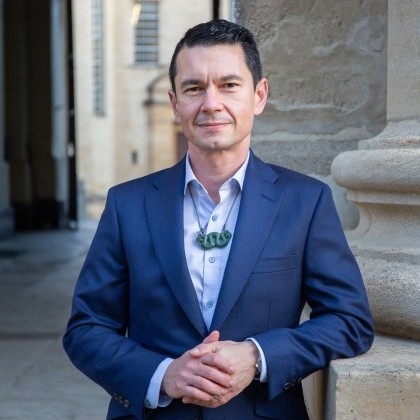 Lyndon Drake
Lyndon Drake
The Rev’d. Dr. Lyndon Drake is a Research Fellow at the University of Oxford, following on from a DPhil in Theology from Oxford (2023) on economics and writing in the Hebrew Bible/Old Testament, and a PhD in Artificial Intelligence from York (2005). He is the operational lead for the Oxford Collaboration on Theology and Artificial Intelligence. Until 2024, he served as the Māori Anglican Archdeacon of Tāmaki Makaurau in Aotearoa/New Zealand. Lyndon also has degrees in science and commerce (Auckland) and two previous degrees in theology (Oxford), along with peer-reviewed publications in science and theology. Until 2010, Lyndon was a Vice President at Barclays Capital, trading interest-rate products. Since then, he has served in church ministry, as well as teaching theology and holding other leadership roles, including as chair of Te Whare Ruruhau o Meri Trust Board (a charity working to reduce family harm and sexual violence).
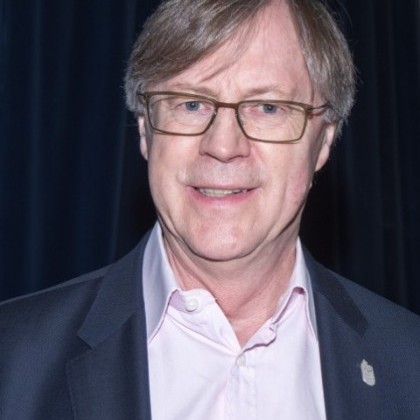 Professor Paul Cartledge
Professor Paul Cartledge
A.G. Leventis Senior Research Fellow of Clare College Cambridge; emeritus A.G. Leventis Professor of Greek Culture in the University of Cambridge. Author, co-author, editor, co-editor of over 30 books, most recently the single-authored Thebes: the Forgotten City of Ancient Greece and Democracy: A Life. I hold three honorary degrees, am a Commander of the Order of Honour (Greece), and an Honorary Citizen of Sparti (modern Sparta).
Mona SiddiquiMona Siddiqui
Mona Siddiqui, OBE is Professor of Religion and Society at Kings College, London. She is a regular commentator in the media, known especially for her appearances on BBC Radio 4 and BBC Radio Scotland’s Thought for the Day as well as BBC Radio 4’s The Moral Maze. In 2012, she appeared as a guest on Radio 4’s Desert Island Discs. She has published widely in the area of Christian -Muslim studies and Islamic law and ethics. She is an elected Fellow of the American Academy of Arts and Sciences, The Royal Society of Edinburgh and an advisor to the Rajaratnam School of International Studies, Nanyang Technological University in Singapore.
09:30 - 10:25WIPING THE SLATE CLEAN: A HISTORY OF DEBT, DEFAULT AND THE ART OF FORGIVENESS
For as long as humans have farmed and traded, fought and governed, they have taken on — and imposed — obligations. Debt is one of civilisation’s oldest tools and oldest burdens: a promise, a punishment, a bond, and sometimes a shackle.
We trace the long arc of clean slates and broken promises — from ancient debt jubilees to medieval usury laws, from moral theology to modern monetary theory.
In this session, an expert panel chaired by Alice Sherwood includes Mona Siddiqui OBE, Professor of Religion and Society at King’s College London, and a frequent contributor to The Moral Maze, the Rev’d. Dr. Lyndon Drake who is a Research Fellow at the University of Oxford, following on from a DPhil in Theology from Oxford (2023) on economics and writing in the Hebrew Bible/Old Testament, and Paul Cartledge, Professor of Greek Culture at the University of Cambridge, debates the enduring tension between mercy and obligation — exploring debt and default not just as financial instruments, but as moral and cultural forces that shape societies.
Whether your interest is history or economics — or in how faith traditions have wrestled with debt — this promises to be a fascinating conversation.
CHAIR: Alice SherwoodAlice Sherwood
Alice Sherwood is the Co-Director of the Weekend of Mistakes. She is the author of the award-winning Authenticity: Reclaiming Reality in a Counterfeit Culture (HarperCollins 2022), which argues that although our counterfeit culture is shaped by the most powerful forces of economics, evolution, and technology, we can still come together to reclaim reality. Currently a Visiting Senior Research Fellow at The Policy Institute at King’s College London, she has been a director of an open-source intelligence company, worked as a management consultant for Accenture, in retail strategy consultancy and private equity, and for the BBC in education and multimedia. She has under-graduate degrees in philosophy and in chemistry, an MBA from INSEAD, and an MA in literary criticism and narrative non-fiction. She is a trustee of the Hay Castle Trust, chair of the Beit Scientific Fellowship at Imperial Colleget, chair of the Rising Tide women’s network, and lives in London and Wales. Authenticity is Alice’s first book. It won a Royal Society of Literature Giles St Aubyn Award for Non-Fiction.
Lyndon DrakeLyndon Drake
The Rev’d. Dr. Lyndon Drake is a Research Fellow at the University of Oxford, following on from a DPhil in Theology from Oxford (2023) on economics and writing in the Hebrew Bible/Old Testament, and a PhD in Artificial Intelligence from York (2005). He is the operational lead for the Oxford Collaboration on Theology and Artificial Intelligence. Until 2024, he served as the Māori Anglican Archdeacon of Tāmaki Makaurau in Aotearoa/New Zealand. Lyndon also has degrees in science and commerce (Auckland) and two previous degrees in theology (Oxford), along with peer-reviewed publications in science and theology. Until 2010, Lyndon was a Vice President at Barclays Capital, trading interest-rate products. Since then, he has served in church ministry, as well as teaching theology and holding other leadership roles, including as chair of Te Whare Ruruhau o Meri Trust Board (a charity working to reduce family harm and sexual violence).
Professor Paul CartledgeProfessor Paul Cartledge
A.G. Leventis Senior Research Fellow of Clare College Cambridge; emeritus A.G. Leventis Professor of Greek Culture in the University of Cambridge. Author, co-author, editor, co-editor of over 30 books, most recently the single-authored Thebes: the Forgotten City of Ancient Greece and Democracy: A Life. I hold three honorary degrees, am a Commander of the Order of Honour (Greece), and an Honorary Citizen of Sparti (modern Sparta).
Mona SiddiquiMona Siddiqui
Mona Siddiqui, OBE is Professor of Religion and Society at Kings College, London. She is a regular commentator in the media, known especially for her appearances on BBC Radio 4 and BBC Radio Scotland’s Thought for the Day as well as BBC Radio 4’s The Moral Maze. In 2012, she appeared as a guest on Radio 4’s Desert Island Discs. She has published widely in the area of Christian -Muslim studies and Islamic law and ethics. She is an elected Fellow of the American Academy of Arts and Sciences, The Royal Society of Edinburgh and an advisor to the Rajaratnam School of International Studies, Nanyang Technological University in Singapore.
09:45 - 10:40The 'pro-growth' lobby position itself as “a real alternative to decline,” arguing that Britain is held back by sclerotic systems and politicians…The 'pro-growth' lobby position itself as “a real alternative to decline,” arguing that Britain is held back by sclerotic systems and politicians unwilling to deliver the changes they believe are necessary. It’s an appealing narrative: cut…
CHAIR: Izabella KaminskaIzabella Kaminska
Izabella Kaminska is the founder and editor of The Blind Spot, a new media venture that aims to shine a light on stories being missed by the wider journalistic pack. The site focuses on finance, market, and media news in both short and long form. It hopes to deliver a healthy mix of analysis and opinion-led commentary, supported by aggregation, news reporting and deep dives.
In February 2023, she also became Politico Europe’s senior finance editor, overseeing the growth of Politico’s financial coverage on a part-time basis, in a deal that secured a special licensing agreement for the distribution of Politico content on The Blind Spot. She continues to author her weekly newsletter at The Blind Spot.
Izabella is an alumnus of the Financial Times, where she spent 13 years in reporting roles, most recently as the editor of FT Alphaville, the Financial Times’s award-winning markets and finance blog. Izabella was also an FT columnist and opinion writer focused on tech, finance, and markets. She has also written as a freelancer for Bloomberg, Boat International, and Public News.
Izabella started her journalistic career in 2001 as a junior reporter for the English-language newspaper the Warsaw Business Journal. She later spent time in the former Soviet Union at the Caspian Business News, which took her to Azerbaijan and Georgia. In 2003 she reported as a freelancer from Kabul, Afghanistan, before joining BP as an Associate Editor of the company’s internal magazine Horizon in 2004.After completing the 2005 Reuters graduate trainee program, Izabella joined Platts to focus on the reporting of European natural gas markets. She then went on to become a senior producer at CNBC in London, producing the channel’s flagship program Squawk Box.
With The Blind Spot Izabella is initiating a two-part plan to try to reconfigure how journalistic information is organized on the Internet.
 Sir Martin Donnelly
Sir Martin Donnelly
Sir Martin Donnelly is a former Permanent Secretary with expertise in business, trade and global economic issues, and four decades of experience shaping policy across Government and the private sector, in the UK and globally. He has worked in Brussels and Paris as well as London, and has written widely on international trade and economic issues, gender diversity and leadership. Martin is a part-time adviser to the Foreign Secretary on the UK's economic diplomacy, and senior independent director at the National Audit Office.' He lives in Bwlch, Powys.
 Lawrence Newport
Lawrence Newport
Dr Lawrence Newport is a campaigner, and co-founder of Looking for Growth. He has led national campaigns for criminal justice reform and public safety, including the successful push to ban XL Bully dogs and tougher sentencing for prolific offenders. A former academic, he uses data and public pressure to force policy change. He is now focused on tackling Britain's decline, unlocking growth, and rebuilding the country's ability to get things done.
 Luke Johnson
Luke Johnson
Luke Johnson is chairman and co-owner of Gail’s Bakeries, which has grown 15-fold since he first invested 15 years ago and makes profits in excess of £50m. Previously he was chairman of PizzaExpress PLC, Channel 4 Television, The Institute of Cancer Research and various other companies and charities. He wrote a weekly business column in The Sunday Times, The FT and The Sunday Telegraph for a combined total of 20 years. Early in his career he worked at a stockbroker as an investment analyst.
09:45 - 10:40Hunting FOR GROWTH: CAN BRITAIN GET ITS MOJO BACK?
The 'pro-growth' lobby position itself as “a real alternative to decline,” arguing that Britain is held back by sclerotic systems and politicians unwilling to deliver the changes they believe are necessary. It’s an appealing narrative: cut through the red tape, unleash innovation, and prosperity follows. But is it really that simple? Or is it just a shortcut that avoids grappling with Britain’s underlying social and economic fractures?
Are their ideas bold solutions — or oversimplified answers to deeper problems? Is this the reset Britain needs to get its mojo back?
Agree or not, this panel which includes Sir Martin Donnelly, former Permanent Secretary with expertise in business, trade and global economic issues, Luke Johnson, chairman and co-owner of Gail's Bakeries, Lawrence Newport, co-founder of Looking for Growth, and Izabella Kaminska, founder and editor of The Blind Spot, promises to get you thinking.
CHAIR: Izabella KaminskaIzabella Kaminska
Izabella Kaminska is the founder and editor of The Blind Spot, a new media venture that aims to shine a light on stories being missed by the wider journalistic pack. The site focuses on finance, market, and media news in both short and long form. It hopes to deliver a healthy mix of analysis and opinion-led commentary, supported by aggregation, news reporting and deep dives.
In February 2023, she also became Politico Europe’s senior finance editor, overseeing the growth of Politico’s financial coverage on a part-time basis, in a deal that secured a special licensing agreement for the distribution of Politico content on The Blind Spot. She continues to author her weekly newsletter at The Blind Spot.
Izabella is an alumnus of the Financial Times, where she spent 13 years in reporting roles, most recently as the editor of FT Alphaville, the Financial Times’s award-winning markets and finance blog. Izabella was also an FT columnist and opinion writer focused on tech, finance, and markets. She has also written as a freelancer for Bloomberg, Boat International, and Public News.
Izabella started her journalistic career in 2001 as a junior reporter for the English-language newspaper the Warsaw Business Journal. She later spent time in the former Soviet Union at the Caspian Business News, which took her to Azerbaijan and Georgia. In 2003 she reported as a freelancer from Kabul, Afghanistan, before joining BP as an Associate Editor of the company’s internal magazine Horizon in 2004.After completing the 2005 Reuters graduate trainee program, Izabella joined Platts to focus on the reporting of European natural gas markets. She then went on to become a senior producer at CNBC in London, producing the channel’s flagship program Squawk Box.
With The Blind Spot Izabella is initiating a two-part plan to try to reconfigure how journalistic information is organized on the Internet.
Sir Martin DonnellySir Martin Donnelly
Sir Martin Donnelly is a former Permanent Secretary with expertise in business, trade and global economic issues, and four decades of experience shaping policy across Government and the private sector, in the UK and globally. He has worked in Brussels and Paris as well as London, and has written widely on international trade and economic issues, gender diversity and leadership. Martin is a part-time adviser to the Foreign Secretary on the UK's economic diplomacy, and senior independent director at the National Audit Office.' He lives in Bwlch, Powys.
Lawrence NewportLawrence Newport
Dr Lawrence Newport is a campaigner, and co-founder of Looking for Growth. He has led national campaigns for criminal justice reform and public safety, including the successful push to ban XL Bully dogs and tougher sentencing for prolific offenders. A former academic, he uses data and public pressure to force policy change. He is now focused on tackling Britain's decline, unlocking growth, and rebuilding the country's ability to get things done.
Luke JohnsonLuke Johnson
Luke Johnson is chairman and co-owner of Gail’s Bakeries, which has grown 15-fold since he first invested 15 years ago and makes profits in excess of £50m. Previously he was chairman of PizzaExpress PLC, Channel 4 Television, The Institute of Cancer Research and various other companies and charities. He wrote a weekly business column in The Sunday Times, The FT and The Sunday Telegraph for a combined total of 20 years. Early in his career he worked at a stockbroker as an investment analyst.
11:00 - 11:55Britain’s state pension promise was built on a simple act of faith: each generation would fund the retirement of the one before. But what happens when…Britain’s state pension promise was built on a simple act of faith: each generation would fund the retirement of the one before. But what happens when the maths no longer works — and the generation footing the bill faces very different economic… CHAIR: Norman Cumming
Norman Cumming
Norman Cumming read Economics at Cambridge. After spells at HM Treasury and Shell, he spent most of his career in institutional investment management. He was global Head of Fixed Income for UBS Asset Management. He was a director of MetLife Assurance Ltd, and a trustee and head of the investment committee at UnLtd, the Foundation for Social Entrepreneurs.
In retirement he is a member of the investment committees of the Cambridge University Pension Scheme; and of Clare College (where he was architect of the College's scheme to borrow long term on an inflation-linked basis, so as to invest in global equities).
Professor the Baroness Alison Wolf DBEProfessor the Baroness Alison Wolf DBE
Professor the Baroness Alison Wolf DBE is the Sir Roy Griffiths Professor of Public Sector Management at King’s College London. She sits as a cross-bench peer (Baroness Wolf of Dulwich) in the UK House of Lords. She specialises in the relationship between education and the labour market. She was the founding Chair of Governors of King’s College London Mathematics School, and remains a governor and vice-chair, and she is a trustee of the University Maths Schools Network.
Alison Wolf served in the No 10 Policy Unit, as a part-time expert adviser on skills and workforce to the UK Prime Minister, from February 2020 to February 2023. She was a panel member for the ‘Augar Review’: the independent Review of Post-18 Education and Funding chaired by Sir Philip Augar, which reported in 2019. In March 2011 she completed the Wolf Report which led to major reforms in vocational education for 14-18 year olds, and she was also a member of the Sainsbury Review which led to the creation of T-levels. Publications include The XX Factor and Does Education Matter?
 James Lynch
James Lynch
James Lynch, portfolio manager, is a member of the global rates team and is responsible for co-managing the UK government bond, segregated absolute return bond, long government bond and inflation-linked government bond portfolios. He also co-manages a segregated pension mandate of an inflation linked and credit strategy. Prior to his current role, James worked for Morgan Stanley where he was a director in the OTC derivatives department. James has been in the industry since 2005 and started with the firm in 2012. James studied Economics at Stirling University and is a CFA charterholder.
11:00 - 11:55Keeping the Faith: Will Gen Z Renege on Boomers’ Pension Promises?
Britain’s state pension promise was built on a simple act of faith: each generation would fund the retirement of the one before.
But what happens when the maths no longer works — and the generation footing the bill faces very different economic prospects, values, and expectations?
The total state pension liability is vast, estimated at around £2.4 trillion — roughly 100% of UK GDP. This system places a heavy burden on younger taxpayers, who are increasingly expected to fund both today’s public-sector retirees and their own future pensions under the same model.In this timely session, we explore whether Gen Z will uphold the social contract their parents relied on or quietly conclude that the deal is broken.
Join Professor the Baroness Alison Wolf DBE, Sir Roy Griffiths Professor of Public Sector Management at King’s College London, and James Lynch aegon asset Management portfolio manager and a member of the global rates team along with chair Norman Cumming a member of the investment committees of the Cambridge University Pension Scheme, as they discuss the politics of intergenerational fairness, the hard economics of an ageing society, and ask whether the next wave of voters will continue to bankroll a system designed for a very different Britain — or demand something radically new.
CHAIR: Norman CummingNorman Cumming
Norman Cumming read Economics at Cambridge. After spells at HM Treasury and Shell, he spent most of his career in institutional investment management. He was global Head of Fixed Income for UBS Asset Management. He was a director of MetLife Assurance Ltd, and a trustee and head of the investment committee at UnLtd, the Foundation for Social Entrepreneurs.
In retirement he is a member of the investment committees of the Cambridge University Pension Scheme; and of Clare College (where he was architect of the College's scheme to borrow long term on an inflation-linked basis, so as to invest in global equities).
Professor the Baroness Alison Wolf DBEProfessor the Baroness Alison Wolf DBE
Professor the Baroness Alison Wolf DBE is the Sir Roy Griffiths Professor of Public Sector Management at King’s College London. She sits as a cross-bench peer (Baroness Wolf of Dulwich) in the UK House of Lords. She specialises in the relationship between education and the labour market. She was the founding Chair of Governors of King’s College London Mathematics School, and remains a governor and vice-chair, and she is a trustee of the University Maths Schools Network.
Alison Wolf served in the No 10 Policy Unit, as a part-time expert adviser on skills and workforce to the UK Prime Minister, from February 2020 to February 2023. She was a panel member for the ‘Augar Review’: the independent Review of Post-18 Education and Funding chaired by Sir Philip Augar, which reported in 2019. In March 2011 she completed the Wolf Report which led to major reforms in vocational education for 14-18 year olds, and she was also a member of the Sainsbury Review which led to the creation of T-levels. Publications include The XX Factor and Does Education Matter?
James LynchJames Lynch
James Lynch, portfolio manager, is a member of the global rates team and is responsible for co-managing the UK government bond, segregated absolute return bond, long government bond and inflation-linked government bond portfolios. He also co-manages a segregated pension mandate of an inflation linked and credit strategy. Prior to his current role, James worked for Morgan Stanley where he was a director in the OTC derivatives department. James has been in the industry since 2005 and started with the firm in 2012. James studied Economics at Stirling University and is a CFA charterholder.
11.:15 - 12:10If you’re a history buff, you’ll love this Saturday morning session. Part of our topical 2026 theme, Default: The History, Art and Ethics of…If you’re a history buff, you’ll love this Saturday morning session. Part of our topical 2026 theme, Default: The History, Art and Ethics of Not Paying Back What You Owe, the story of debtors’ prisons is longer — and stranger — than many…
CHAIR: Theodora ZemekTheodora Zemek
Theodora Zemek has had a 40 year career in the City, largely in fixed income investment. She has managed portfolios for central banks, insurance and pensions companies and retail investors. She was formerly a Non Exec for BlackRock Fund Managers
Prior to her retirement, she was Global Head of Fixed Income for Axa Investment Managers, responsible for Euros 385 billion in assets.. She established the fixed income divisions of M and G Investment Management (1992) and New Star Asset Management (2001), having launched the first UK Corporate Bond unit trust and the first UK High Yield Corporate Bond Fund.
Theo received her PhD in History from Cambridge in 1985, with a thesis on the the influence of the Scottish Enlightenment (Smith and Ferguson) in France.
 Ray Perman
Ray Perman
Ray Perman was a financial journalist for over 30 years on newspapers including the Financial Times and The Times. He is the author of four books, including The Rise & Fall of the City of Money, a financial history of Edinburgh, and HUBRIS, an account of the collapse of HBOS in 2009. His latest work is a biography of the Enlightenment geologist and businessman James Hutton. He is a fellow of the Royal Society of Edinburgh and chair of court at the University of St Andrews.
Professor Paul CartledgeProfessor Paul Cartledge
A.G. Leventis Senior Research Fellow of Clare College Cambridge; emeritus A.G. Leventis Professor of Greek Culture in the University of Cambridge. Author, co-author, editor, co-editor of over 30 books, most recently the single-authored Thebes: the Forgotten City of Ancient Greece and Democracy: A Life. I hold three honorary degrees, am a Commander of the Order of Honour (Greece), and an Honorary Citizen of Sparti (modern Sparta).
11.:15 - 12:10The Price of Default: A Human History of Debtors’ Prison
If you’re a history buff, you’ll love this Saturday morning session.
Part of our topical 2026 theme, Default: The History, Art and Ethics of Not Paying Back What You Owe, the story of debtors’ prisons is longer — and stranger — than many people realise.
For most of history, failing to pay your debts was not a financial problem — it was a crime.
From Classical Rome, where debtors could be enslaved, to the trading cities of the Renaissance, where prison was used as leverage rather than justice, societies have repeatedly answered financial failure with punishment. Debt was treated as a moral flaw, not an economic risk.
That logic reached its most brutal and bureaucratic form in Georgian and Victorian England. As credit spread through everyday life, debtors’ prisons filled up. Thousands were jailed, often for small sums. Prison was used to humiliate debtors into begging publicly for help, and to apply pressure to families and patrons. The most infamous of these prisons, Marshalsea Prison, became a symbol of a system that punished failure while doing nothing to resolve it.
It took public outrage, reform campaigns — and the writing of Charles Dickens, whose own father was imprisoned for debt — to force change. By the late 19th century, Britain finally accepted an uncomfortable truth: jailing debtors did not make debts disappear. It merely deepened them.
Who should pay the price when risks go wrong? The answer we give has profound implications for any society, financially and morally. Set punishment too high and people stop taking the risks essential for economic growth; set it too low and conmen and scammers thrive.
This session asks why societies continue to criminalise default, shame failure and confuse debt with wrongdoing — and what the long history of debtors’ prisons can tell us about how we treat financial distress today.
Join Ray Perman, author of Edinburgh: The Rise and Fall of the City of Money, in discussion with Professor Paul Cartledge, a leading authority on classical civilisation, for a vivid journey through the long history of punishing debt and default. This session will be chaired by Theodora Zemek former Global Head of Fixed Income for Axa Investment Managers.
CHAIR: Theodora ZemekTheodora Zemek
Theodora Zemek has had a 40 year career in the City, largely in fixed income investment. She has managed portfolios for central banks, insurance and pensions companies and retail investors. She was formerly a Non Exec for BlackRock Fund Managers
Prior to her retirement, she was Global Head of Fixed Income for Axa Investment Managers, responsible for Euros 385 billion in assets.. She established the fixed income divisions of M and G Investment Management (1992) and New Star Asset Management (2001), having launched the first UK Corporate Bond unit trust and the first UK High Yield Corporate Bond Fund.
Theo received her PhD in History from Cambridge in 1985, with a thesis on the the influence of the Scottish Enlightenment (Smith and Ferguson) in France.
Ray PermanRay Perman
Ray Perman was a financial journalist for over 30 years on newspapers including the Financial Times and The Times. He is the author of four books, including The Rise & Fall of the City of Money, a financial history of Edinburgh, and HUBRIS, an account of the collapse of HBOS in 2009. His latest work is a biography of the Enlightenment geologist and businessman James Hutton. He is a fellow of the Royal Society of Edinburgh and chair of court at the University of St Andrews.
Professor Paul CartledgeProfessor Paul Cartledge
A.G. Leventis Senior Research Fellow of Clare College Cambridge; emeritus A.G. Leventis Professor of Greek Culture in the University of Cambridge. Author, co-author, editor, co-editor of over 30 books, most recently the single-authored Thebes: the Forgotten City of Ancient Greece and Democracy: A Life. I hold three honorary degrees, am a Commander of the Order of Honour (Greece), and an Honorary Citizen of Sparti (modern Sparta).
Cinema11:00 - 11:55What if court cases became an asset class? This session, chaired by Weekend of Mistakes director Paul Greatbach, lifts the lid on the fast-growing…What if court cases became an asset class? This session, chaired by Weekend of Mistakes director Paul Greatbach, lifts the lid on the fast-growing world of litigation finance — where investors fund legal battles in exchange for a share of the…
CHAIR: Paul GreatbatchPaul Greatbatch
Paul Greatbatch was a Partner & Portfolio Manager at Genesis Investment Management from 1994-2013, one the oldest specialist managers operating in Emerging Markets on behalf of large institutional clients
 Robert Hanna
Robert Hanna
Robert is co-founder of Ashdown Litigation Partners, an independent facilitator and co-ordinator of protected litigation financing opportunities. Prior to that Robert co-founded Augusta the UK’s largest litigation funders by case volume. He was responsible for both claims and investment generation. Robert spent over 20 years in the hedge fund industry, initially as Head of Sales for the International Equity Finance department of Merrill Lynch International based in London, then as Global Head of Marketing and Sales for the Equity Finance Department of Merrill Lynch, Pierce, Fenner & Smith in New York. He subsequently co-founded Mako Investment Managers, a multi-hedge fund asset manager, acting as Chief Investment Officer.
Cinema11:00 - 11:55Minority Sports - LITIGATION FINANCING
What if court cases became an asset class? This session, chaired by Weekend of Mistakes director Paul Greatbach, lifts the lid on the fast-growing world of litigation finance — where investors fund legal battles in exchange for a share of the winnings — and examines the rewards, risks and ethical dilemmas behind this high-stakes market with Robert Hanna co founder of Ashdown Litigation Partners
CHAIR: Paul GreatbatchPaul Greatbatch
Paul Greatbatch was a Partner & Portfolio Manager at Genesis Investment Management from 1994-2013, one the oldest specialist managers operating in Emerging Markets on behalf of large institutional clients
Robert HannaRobert Hanna
Robert is co-founder of Ashdown Litigation Partners, an independent facilitator and co-ordinator of protected litigation financing opportunities. Prior to that Robert co-founded Augusta the UK’s largest litigation funders by case volume. He was responsible for both claims and investment generation. Robert spent over 20 years in the hedge fund industry, initially as Head of Sales for the International Equity Finance department of Merrill Lynch International based in London, then as Global Head of Marketing and Sales for the Equity Finance Department of Merrill Lynch, Pierce, Fenner & Smith in New York. He subsequently co-founded Mako Investment Managers, a multi-hedge fund asset manager, acting as Chief Investment Officer.
12.30 - 13:25The UK’s water industry is in deep trouble — collapsing infrastructure, rising bills, sewage spills, strained regulators, and companies drowning in…The UK’s water industry is in deep trouble — collapsing infrastructure, rising bills, sewage spills, strained regulators, and companies drowning in debt. Whether you live beside a river or simply drink the stuff, water matters.This session unravels…
CHAIR: Professor the Baroness Alison Wolf DBEProfessor the Baroness Alison Wolf DBE
Professor the Baroness Alison Wolf DBE is the Sir Roy Griffiths Professor of Public Sector Management at King’s College London. She sits as a cross-bench peer (Baroness Wolf of Dulwich) in the UK House of Lords. She specialises in the relationship between education and the labour market. She was the founding Chair of Governors of King’s College London Mathematics School, and remains a governor and vice-chair, and she is a trustee of the University Maths Schools Network.
Alison Wolf served in the No 10 Policy Unit, as a part-time expert adviser on skills and workforce to the UK Prime Minister, from February 2020 to February 2023. She was a panel member for the ‘Augar Review’: the independent Review of Post-18 Education and Funding chaired by Sir Philip Augar, which reported in 2019. In March 2011 she completed the Wolf Report which led to major reforms in vocational education for 14-18 year olds, and she was also a member of the Sainsbury Review which led to the creation of T-levels. Publications include The XX Factor and Does Education Matter?
 Ed Richards
Ed Richards
Ed Richards is a co-founder of Flint Global Ltd. Flint works with companies and other organisationswho seek to navigate successful developments in the policy, political and regulatory arenas. The company works globally from six offices across Europe and the Asia Pacific region. Ed works across a broad range of sectors including digital/tech and other network industries, as well as on general policy, competition, and regulatory issues.
Before co-founding Flint, Ed spent more than eight years as the Chief Executive of Ofcom, the UK’s communications regulator. Earlier in his career Ed worked as an adviser to the UK Prime Minister in 10 Downing Street covering a wide range of domestic policy areas and helping to coordinate the introduction of significant legislation. Prior to this, he led the Corporate Strategy team at the BBC during the development of digital technology and services.
In addition to his position as Founding Partner at Flint, Ed is also Chair of Nesta, the social innovation charity and Chair of the Behavioural Insights Team (the Nudge Unit).
 David Black
David Black
David is a regulatory expert and economist. He works at the interface of regulation, finance and infrastructure. He was Chief Executive of Ofwat, the economic regulator of the water sector in England and Wales 2021-25. Prior to this he held a number of senior roles at Ofwat including Executive Director leading the 2019 price review and Economics Director. Before Ofwat, David worked in economic regulation and competition in the telecommunications, energy and water sectors as a consultant and in Government in the UK and New Zealand."
12.30 - 13:25What Went Wrong with the UK’s Water Industry — and How to Fix It
The UK’s water industry is in deep trouble — collapsing infrastructure, rising bills, sewage spills, strained regulators, and companies drowning in debt. Whether you live beside a river or simply drink the stuff, water matters.
This session unravels how governments, regulators and water companies collectively created the crisis — and what solutions are actually on the table.
Join our expert panel including Ed Richards who spent more than eight years as the Chief Executive of Ofcom, the UK’s communications regulator, David Black, an expert with a number of senior roles at Ofwat including Executive Director leading the 2019 price review and Economics Director and Professor the Baroness Alison Wolf DBE, Sir Roy Griffiths Professor of Public Sector Management at King’s College London, for a fast-paced discussion as we wade through the quagmire to ask the question that matters: how do we put it right?
CHAIR: Professor the Baroness Alison Wolf DBEProfessor the Baroness Alison Wolf DBE
Professor the Baroness Alison Wolf DBE is the Sir Roy Griffiths Professor of Public Sector Management at King’s College London. She sits as a cross-bench peer (Baroness Wolf of Dulwich) in the UK House of Lords. She specialises in the relationship between education and the labour market. She was the founding Chair of Governors of King’s College London Mathematics School, and remains a governor and vice-chair, and she is a trustee of the University Maths Schools Network.
Alison Wolf served in the No 10 Policy Unit, as a part-time expert adviser on skills and workforce to the UK Prime Minister, from February 2020 to February 2023. She was a panel member for the ‘Augar Review’: the independent Review of Post-18 Education and Funding chaired by Sir Philip Augar, which reported in 2019. In March 2011 she completed the Wolf Report which led to major reforms in vocational education for 14-18 year olds, and she was also a member of the Sainsbury Review which led to the creation of T-levels. Publications include The XX Factor and Does Education Matter?
Ed RichardsEd Richards
Ed Richards is a co-founder of Flint Global Ltd. Flint works with companies and other organisationswho seek to navigate successful developments in the policy, political and regulatory arenas. The company works globally from six offices across Europe and the Asia Pacific region. Ed works across a broad range of sectors including digital/tech and other network industries, as well as on general policy, competition, and regulatory issues.
Before co-founding Flint, Ed spent more than eight years as the Chief Executive of Ofcom, the UK’s communications regulator. Earlier in his career Ed worked as an adviser to the UK Prime Minister in 10 Downing Street covering a wide range of domestic policy areas and helping to coordinate the introduction of significant legislation. Prior to this, he led the Corporate Strategy team at the BBC during the development of digital technology and services.
In addition to his position as Founding Partner at Flint, Ed is also Chair of Nesta, the social innovation charity and Chair of the Behavioural Insights Team (the Nudge Unit).
David BlackDavid Black
David is a regulatory expert and economist. He works at the interface of regulation, finance and infrastructure. He was Chief Executive of Ofwat, the economic regulator of the water sector in England and Wales 2021-25. Prior to this he held a number of senior roles at Ofwat including Executive Director leading the 2019 price review and Economics Director. Before Ofwat, David worked in economic regulation and competition in the telecommunications, energy and water sectors as a consultant and in Government in the UK and New Zealand."
12:45 - 13:40If you’ve ever wondered about the real power (and peril) of family money, this is the session for you. Family offices sit behind a velvet curtain:…If you’ve ever wondered about the real power (and peril) of family money, this is the session for you. Family offices sit behind a velvet curtain: discreet, powerful, and quietly shaping the lives of the ultra-wealthy. But what actually happens…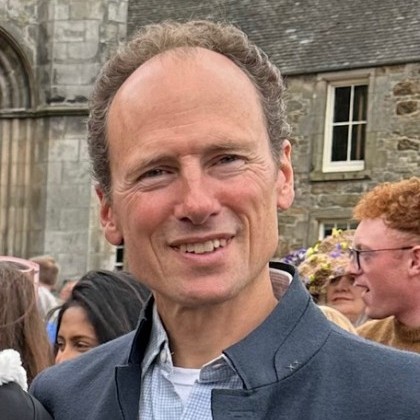 CHAIR: Tim Heffer
Tim Heffer
Tim has 30 years experience working in investment management at firms including T. Rowe Price, SKAGEN Funds and, most recently, Storebrand Asset Management, a leading Norwegian, sustainability focused manager. Tim headed up the UK business for Storebrand.
Tim is now focused on nature restoration, food and farming including wilding his family farm. Rhian Anwen Hamill
Rhian Anwen Hamill
Rhian-Anwen Hamill is Director of Family Enterprise at the Institute of Entrepreneurship and Private Capital at London Business School and Managing Partner of RAH Partners, a family business advisory firm. She works with founders and privately owned businesses on matters of governance, succession planning, and next-generation preparation. Her experience comes from business, financial services, coaching, psychology, philanthropy, and the arts.
She writes on a wide range of issues affecting families, including coaching for succession planning, family office recruitment, and women in family enterprise. Her work has been published in Family Capital, Globe Law and Business, and STEP’s Family Office Journals. She is a respected speaker and facilitator at family business events.Rhian has spent nearly 40 years immersed in financial and professional services, starting her career at Goldman Sachs, and since 2005, running her own firm, RAH Partners. She has also operated at board/C-suite level in the world of arts and philanthropy.
12:45 - 13:40Minority Sports - The World of Family Offices
If you’ve ever wondered about the real power (and peril) of family money, this is the session for you.
Family offices sit behind a velvet curtain: discreet, powerful, and quietly shaping the lives of the ultra-wealthy. But what actually happens inside them? What are they for? And do they truly work for the families who rely on them?
In this session, Rhian Anwen Hamill, Director of Family Enterprise at the Institute of Entrepreneurship and Private Capital (IEPC) at London Business School, guides us into a world few ever see. Lifting the veil on family enterprises and on the people who inherit responsibility as well as wealth, we explore the human dramas behind the balance sheets: succession tensions, unspoken expectations, the burden of legacy, and the delicate work of building harmony and preparing the next generation for both privilege and purpose. Chaired by Tim Heffer who has 30 years experience working in investment management.
CHAIR: Tim HefferTim Heffer
Tim has 30 years experience working in investment management at firms including T. Rowe Price, SKAGEN Funds and, most recently, Storebrand Asset Management, a leading Norwegian, sustainability focused manager. Tim headed up the UK business for Storebrand.
Tim is now focused on nature restoration, food and farming including wilding his family farm.
Rhian Anwen HamillRhian Anwen Hamill
Rhian-Anwen Hamill is Director of Family Enterprise at the Institute of Entrepreneurship and Private Capital at London Business School and Managing Partner of RAH Partners, a family business advisory firm. She works with founders and privately owned businesses on matters of governance, succession planning, and next-generation preparation. Her experience comes from business, financial services, coaching, psychology, philanthropy, and the arts.
She writes on a wide range of issues affecting families, including coaching for succession planning, family office recruitment, and women in family enterprise. Her work has been published in Family Capital, Globe Law and Business, and STEP’s Family Office Journals. She is a respected speaker and facilitator at family business events.Rhian has spent nearly 40 years immersed in financial and professional services, starting her career at Goldman Sachs, and since 2005, running her own firm, RAH Partners. She has also operated at board/C-suite level in the world of arts and philanthropy.
Cinema12:30 - 13:25The rules of corporate survival are being rewritten. We still picture bankruptcy as a final implosion — failure, collapse, the dust settling on the…The rules of corporate survival are being rewritten. We still picture bankruptcy as a final implosion — failure, collapse, the dust settling on the wreckage — but the reality is shifting fast.The UK has quietly become a more company-friendly…
CHAIR: Paul GreatbatchPaul Greatbatch
Paul Greatbatch was a Partner & Portfolio Manager at Genesis Investment Management from 1994-2013, one the oldest specialist managers operating in Emerging Markets on behalf of large institutional clients
 Anat Admati
Anat Admati
Anat R. Admati is the George G.C. Parker Professor of Finance and Economics at Stanford University Graduate School of Business, where she is also a Faculty Director of the Corporations and Society Initiative. She also a senior fellow at Stanford Institute for Economic Policy Research and (by courtesy) of the Freeman Spogli Institute for International Studies (FSI), where she directs the Program on Capitalism and Democracy at the Center for Democracy, Development and the Rule of Law.
Admati has written extensively on information dissemination in financial markets, portfolio management, financial contracting, corporate governance and banking. Her current research, teaching and advocacy focus on the complex interactions between business, law, and policy with focus on governance and accountability.
Since 2010, Admati has been active in the policy debate on financial regulations. She is the co-author, with Martin Hellwig, of the highly acclaimed book The Bankers’ New Clothes: What’s Wrong with Banking and What to Do about It (Princeton University Press, 2013), whose expanded edition was published in 2024. In 2014, she was named by Time Magazine as one of the 100 most influential people in the world and by Foreign Policy Magazine as among 100 global thinkers.
Admati holds BSc from the Hebrew University, MA, MPhil and PhD from Yale University, and an honorary doctorate from University of Zurich. She is a fellow of the Econometric Society, the recipient of multiple fellowships, research grants, and paper recognition, and is a past board member of the American Finance Association. She has served on several editorial boards and was a member of the FDIC’s Systemic Resolution Advisory Committee and the CFTC’s Market Risk Advisory Committee.
Cinema12:30 - 13:25"WE CAN WORK IT OUT" — New Rules and Second Lives for Bankrupt Companies
The rules of corporate survival are being rewritten. We still picture bankruptcy as a final implosion — failure, collapse, the dust settling on the wreckage — but the reality is shifting fast.
The UK has quietly become a more company-friendly restructuring environment. Management can now seek increased protection from creditors, tilting the balance toward rescue rather than receivership. And with US-style bankruptcy tools increasingly embedded in UK law, distressed companies now have a better chance of surviving intact.
But new legal tools alone don’t save companies — leaders do. Anat R. Admati, George G.C. Parker Professor of Finance and Economics at Stanford University Graduate School of Business, and chair, Weekend of Mistakes Director Paul Greatbach, will unpack the practical mechanics of corporate rescue: when to seek breathing space, how to negotiate with creditors, how to protect the talent and assets that matter, and how to communicate when confidence is collapsing.
Bankruptcy is no longer the end of the story. In the new landscape, it can be a beginning.
CHAIR: Paul GreatbatchPaul Greatbatch
Paul Greatbatch was a Partner & Portfolio Manager at Genesis Investment Management from 1994-2013, one the oldest specialist managers operating in Emerging Markets on behalf of large institutional clients
Anat AdmatiAnat Admati
Anat R. Admati is the George G.C. Parker Professor of Finance and Economics at Stanford University Graduate School of Business, where she is also a Faculty Director of the Corporations and Society Initiative. She also a senior fellow at Stanford Institute for Economic Policy Research and (by courtesy) of the Freeman Spogli Institute for International Studies (FSI), where she directs the Program on Capitalism and Democracy at the Center for Democracy, Development and the Rule of Law.
Admati has written extensively on information dissemination in financial markets, portfolio management, financial contracting, corporate governance and banking. Her current research, teaching and advocacy focus on the complex interactions between business, law, and policy with focus on governance and accountability.
Since 2010, Admati has been active in the policy debate on financial regulations. She is the co-author, with Martin Hellwig, of the highly acclaimed book The Bankers’ New Clothes: What’s Wrong with Banking and What to Do about It (Princeton University Press, 2013), whose expanded edition was published in 2024. In 2014, she was named by Time Magazine as one of the 100 most influential people in the world and by Foreign Policy Magazine as among 100 global thinkers.
Admati holds BSc from the Hebrew University, MA, MPhil and PhD from Yale University, and an honorary doctorate from University of Zurich. She is a fellow of the Econometric Society, the recipient of multiple fellowships, research grants, and paper recognition, and is a past board member of the American Finance Association. She has served on several editorial boards and was a member of the FDIC’s Systemic Resolution Advisory Committee and the CFTC’s Market Risk Advisory Committee.
14:00 - 14:55Join the WoM @ Hay Castle club and enjoy an exclusive tour of Hay Castle in the company of art historian and Director, Tom True,…Join the WoM @ Hay Castle club and enjoy an exclusive tour of Hay Castle in the company of art historian and Director, Tom True, introducing 900 years of history, a cast of colourful castle characters, and the improbable tale of a multi…14:00 - 14:55Join the WoM @ Hay Castle club and enjoy an exclusive tour of Hay Castle in the company of art historian and Director, Tom True, introducing 900 years of history, a cast of colourful castle characters, and the improbable tale of a multi award-winning renovation of a critically at-risk landmark. Supporting the castle through a WoM@ Hay Castle club membership also entitles you to other exclusive castle and WoM offers in future years.
[Lunch - Patrons & Premium only]14:15 - 15:10Why aren’t investors looking at Japan anymore? In the 1980s, Japan was widely expected to dominate the global economy. Then the bubble burst, growth…Why aren’t investors looking at Japan anymore? In the 1980s, Japan was widely expected to dominate the global economy. Then the bubble burst, growth slowed, the population aged, and commentators wrote the country off as an economic cautionary tale.… CHAIR: Merryn Somerset-Webb
Merryn Somerset-Webb
Merryn Somerset Webb was founding editor of Moneyweek magazine in 2000. She remained at the magazine as Editor in Chief until late 2022. Merryn was also a Contributing Editor to and weekly columnist for the Financial Times until September 2022. She is currently Editor at Large. Bloomberg Wealth writing about wealth, investing and personal finance and hosts the 'Merryn Talks Money' podcast. Merryn is also an experienced non executive director and currently sits on the board of two listed investment trusts.
 Russell Jones
Russell Jones
Russell Jones has been a professional macroeconomist for some forty years. Over the course of his long career, he has at different times been domiciled in London, Tokyo, Abu Dhabi, and Sydney, and applied his skills to all the major asset classes. He has worked for a number of major financial institutions, been a partner at one of Britain's foremost economic consultancies, and provided advice not just to leading asset managers, but also to several governments and central banks. He has also published a number of books.
Russell NapierRussell Napier
Russell Napier is author of The Solid Ground investment report for institutional investors and co-founder of the investment research portal ERIC- a business he now co-owns with D.C. Thomson. Russell has worked in the investment business for 35 years and has been advising global institutional investors on asset allocation since 1995. Russell is author of the book Anatomy of The Bear: Lessons From Wall Street’s Four Great Bottoms ( in print for almost twenty years and ‘a cult classic’ according to the FT) and is founder and course director of The Practical History of Financial Markets course. The course has run since 2004 and is now available on campus at Edinburgh Business School, in a two and a half day in-person executive version in London and also online.
He is a member of the investment advisory committees of three fund management companies, Cerno Capital, Kennox Asset Management and Bay Capital. He is part owner of both Cerno and Kennox.
In 2014 Russell founded the charitable venture The Library of Mistakes a business and financial history library in Edinburgh that now has branches in India and Switzerland. Plans to open libraries in London, Singapore, Toronto and Mumbai are progressing. The Library of Mistakes hosts lectures which are live streamed and recorded and a podcast series was launched in 2022. The Library and the course are owned and operated by a Scottish registered charity called Didasko which donates its financial surpluses to promote financial education.
Russell has degrees in law from Queen’s University Belfast and Magdalene College Cambridge. He is a Fellow of The CFA Society of the UK , an Honorary Fellow of the CISI and is an Honorary Professor at The University of Stirling and a Visiting Professor at Heriot Watt University. His second book – The Asian Financial Crisis 1995-1998: Birth of the Age of Debt- was published in July 2021.
[Lunch - Patrons & Premium only]14:15 - 15:10JAPAN: INVINCIBLE COMPETITOR, ECONOMIC BASKET CASE - OR INVESTMENT OPPORTUNITY?
Why aren’t investors looking at Japan anymore? In the 1980s, Japan was widely expected to dominate the global economy. Then the bubble burst, growth slowed, the population aged, and commentators wrote the country off as an economic cautionary tale. And yet it remains the world’s fourth-largest economy — a technological powerhouse that continues to post productivity gains many nations would envy. Japan, as ever, refuses to fit the narrative.
So why do so few investors pay attention — are we still trapped in the old story of “lost decades,” missing what’s happening right in front of us?
This session, chaired by Merryn Somerset Webb, founding editor of Moneyweek and currently Editor at Large, Bloomberg Wealth, brings together historian Russell Jones, whose new work traces Japan’s turbulent and fascinating modern arc, and investor Russell Napier, a specialist in Asian market cycles and long-term regional trends. Together, they’ll explore where the myths end, where the opportunities might begin, and why this famously misunderstood advanced economy may deserve a second look.
CHAIR: Merryn Somerset-WebbMerryn Somerset-Webb
Merryn Somerset Webb was founding editor of Moneyweek magazine in 2000. She remained at the magazine as Editor in Chief until late 2022. Merryn was also a Contributing Editor to and weekly columnist for the Financial Times until September 2022. She is currently Editor at Large. Bloomberg Wealth writing about wealth, investing and personal finance and hosts the 'Merryn Talks Money' podcast. Merryn is also an experienced non executive director and currently sits on the board of two listed investment trusts.
Russell JonesRussell Jones
Russell Jones has been a professional macroeconomist for some forty years. Over the course of his long career, he has at different times been domiciled in London, Tokyo, Abu Dhabi, and Sydney, and applied his skills to all the major asset classes. He has worked for a number of major financial institutions, been a partner at one of Britain's foremost economic consultancies, and provided advice not just to leading asset managers, but also to several governments and central banks. He has also published a number of books.
Russell NapierRussell Napier
Russell Napier is author of The Solid Ground investment report for institutional investors and co-founder of the investment research portal ERIC- a business he now co-owns with D.C. Thomson. Russell has worked in the investment business for 35 years and has been advising global institutional investors on asset allocation since 1995. Russell is author of the book Anatomy of The Bear: Lessons From Wall Street’s Four Great Bottoms ( in print for almost twenty years and ‘a cult classic’ according to the FT) and is founder and course director of The Practical History of Financial Markets course. The course has run since 2004 and is now available on campus at Edinburgh Business School, in a two and a half day in-person executive version in London and also online.
He is a member of the investment advisory committees of three fund management companies, Cerno Capital, Kennox Asset Management and Bay Capital. He is part owner of both Cerno and Kennox.
In 2014 Russell founded the charitable venture The Library of Mistakes a business and financial history library in Edinburgh that now has branches in India and Switzerland. Plans to open libraries in London, Singapore, Toronto and Mumbai are progressing. The Library of Mistakes hosts lectures which are live streamed and recorded and a podcast series was launched in 2022. The Library and the course are owned and operated by a Scottish registered charity called Didasko which donates its financial surpluses to promote financial education.
Russell has degrees in law from Queen’s University Belfast and Magdalene College Cambridge. He is a Fellow of The CFA Society of the UK , an Honorary Fellow of the CISI and is an Honorary Professor at The University of Stirling and a Visiting Professor at Heriot Watt University. His second book – The Asian Financial Crisis 1995-1998: Birth of the Age of Debt- was published in July 2021.
Cinema14:00 - 14:55Small businesses are the engine of every economy — but how should investors think about funding them? This session which is chaired by David…Small businesses are the engine of every economy — but how should investors think about funding them? This session which is chaired by David Clarke, CEO of Didasko Education Company, the charity behind the Library of Mistakes. explores the…
CHAIR: David ClarkeDavid Clarke
David Clarke CFA is CEO of Didasko Education Company, the charity behind the Library of Mistakes, Practical History of Financial Markets courses, Future Asset and Leavers’ Money Skills.
After studying philosophy at Trinity College Dublin, he joined the Bloomberg News team in 2000, reporting on Europe’s burgeoning investment management industry. Later posts saw him as editor-at-large for EMEA news sales and editor for bonds and foreign exchange.
After completing his CFA exams he focused on communications for the investment industry, working for a number of well-known investment and wealth management houses. He has also run marketing teams in the wider financial information sector.
A keen supporter of the finance industry and the good that it can do, he has been involved for many years in encouraging the development of Scotland’s investment sector and its international links, particularly with Ireland, and was until recently chairman of the CFA society in Scotland.
He joined Didasko Education in 2022 as its first CEO, overseeing its expanded portfolio of activities in events and media., increased commercial operations and also its plans to develop more libraries around the world.
He is an accomplished musician, and worked in entertainment in his early 20s. He is also a strong supporter of international cooperation and is chairman of the European Movement in Scotland and a board member of European Movement UK.
 Ivan Sedgwick
Ivan Sedgwick
Ivan Sedgwick has worked, largely in equities, at Morgan Stanley, Schroders, Lazards and Societe Generale, in London and New York. For the last few years he has acted as Investment Director for LGB & Co., as well as being a director of a community-owned broadband network, and serving on the council of the Royal Asiatic Society. He studied history at Cambridge and Birkbeck, University of London and has an MBA from the Bayes Business School. He lives in Lancashire.
 Keith Hiscock
Keith Hiscock
Keith Hiscock is the Chief Executive of Hardman & Co Keith has published a number of papers on the issues facing companies and markets in today’s climate. His career in stockbroking started 43 years ago at James Capel, at the time, the top-ranked research house in London. He was a founding member of Schroder Securities and of Agency Partners, a leading research boutique, and was a member of the five-man securities board at Evolution. Keith has also advised companies, large and small, on their relationships with the capital markets
Cinema14:00 - 14:55Minority Sports - Small Business Financing
Small businesses are the engine of every economy — but how should investors think about funding them?
This session which is chaired by David Clarke, CEO of Didasko Education Company, the charity behind the Library of Mistakes. explores the opportunities, risks and models shaping small-business finance today, with Ivan Sedgwick, investment director of LGB & Co and Keith Hiscock, chief executive of Hardman & Co, from smart lending to equity stakes and everything in between.
CHAIR: David ClarkeDavid Clarke
David Clarke CFA is CEO of Didasko Education Company, the charity behind the Library of Mistakes, Practical History of Financial Markets courses, Future Asset and Leavers’ Money Skills.
After studying philosophy at Trinity College Dublin, he joined the Bloomberg News team in 2000, reporting on Europe’s burgeoning investment management industry. Later posts saw him as editor-at-large for EMEA news sales and editor for bonds and foreign exchange.
After completing his CFA exams he focused on communications for the investment industry, working for a number of well-known investment and wealth management houses. He has also run marketing teams in the wider financial information sector.
A keen supporter of the finance industry and the good that it can do, he has been involved for many years in encouraging the development of Scotland’s investment sector and its international links, particularly with Ireland, and was until recently chairman of the CFA society in Scotland.
He joined Didasko Education in 2022 as its first CEO, overseeing its expanded portfolio of activities in events and media., increased commercial operations and also its plans to develop more libraries around the world.
He is an accomplished musician, and worked in entertainment in his early 20s. He is also a strong supporter of international cooperation and is chairman of the European Movement in Scotland and a board member of European Movement UK.
Ivan SedgwickIvan Sedgwick
Ivan Sedgwick has worked, largely in equities, at Morgan Stanley, Schroders, Lazards and Societe Generale, in London and New York. For the last few years he has acted as Investment Director for LGB & Co., as well as being a director of a community-owned broadband network, and serving on the council of the Royal Asiatic Society. He studied history at Cambridge and Birkbeck, University of London and has an MBA from the Bayes Business School. He lives in Lancashire.
Keith HiscockKeith Hiscock
Keith Hiscock is the Chief Executive of Hardman & Co Keith has published a number of papers on the issues facing companies and markets in today’s climate. His career in stockbroking started 43 years ago at James Capel, at the time, the top-ranked research house in London. He was a founding member of Schroder Securities and of Agency Partners, a leading research boutique, and was a member of the five-man securities board at Evolution. Keith has also advised companies, large and small, on their relationships with the capital markets
15:15 - 16:10When a debt crisis unfolds behind closed doors, who really has the upper hand? In this live recording of the hit podcast A Long Time in Finance, hosts…When a debt crisis unfolds behind closed doors, who really has the upper hand? In this live recording of the hit podcast A Long Time in Finance, hosts Jonathan Ford and Neil Collins, joined by Edward Starling lift the lid on some of the… Jonathan Ford
Jonathan Ford
Jonathan Ford is a freelance writer. He was an editor and columnist at the Financial Times, and held senior editorial positions at Prospect Magazine, Reuters and Breakingviews. He now presents a podcast on financial and business history called A Long Time in Finance and writes a substack, Business Adventures.
 Neil Collins
Neil Collins
City editor of the Daily Telegraph for 19 years, Neil has spent nearly all his working life in financial journalism, culminating in a weekly column for the Financial Times and a monthly column for The Oldie. He lives in London and is an enthusiastic, if mediocre, fly-fisherman. In addition to A Long Time In Finance podcast with Jonathan Ford, he writes a monthly column for The Oldie magazin
 Edward Starling
Edward Starling
Ed Starling is Head of the Disputes Practice at Wedlake Bell and a specialist in insolvency, restructuring and commercial litigation.
He advises a wide range of stakeholders, including creditors, insolvency practitioners, LPA receivers, trustees in bankruptcy, companies, directors, lenders, shareholders, LLP members and purchasers of distressed assets.
Ed has extensive experience acting in claims brought by or against insolvency officeholders for the benefit of recovering sums for creditors.
In addition, Ed handles significant civil fraud matters, including investment and Ponzi‑style schemes, as well as cases involving dishonesty, misrepresentation and cross‑border jurisdiction issues.
15:15 - 16:10'A Long Time in Finance' — Live Podcast Recording
When a debt crisis unfolds behind closed doors, who really has the upper hand? In this live recording of the hit podcast A Long Time in Finance, hosts Jonathan Ford and Neil Collins, joined by Edward Starling lift the lid on some of the murkiest manoeuvres in modern finance.
Drawing on decades of collective experience — and more than a few colourful war stories — they’ll unpack how supposedly sophisticated lenders keep getting squeezed, and how the same tactics echo across restructurings, workouts, political careers, and even entire economies.
Smart, sharp, and unafraid to name the behaviours no one admits in public, this session puts A Long Time in Finance right at the centre of this year’s theme: Default — the history, art and ethics of not paying back what you owe.
An unmissable chance to hear finance’s favourite double-act dissect the games, gambits and characters behind some of the most consequential deals in the business.
Jonathan FordJonathan Ford
Jonathan Ford is a freelance writer. He was an editor and columnist at the Financial Times, and held senior editorial positions at Prospect Magazine, Reuters and Breakingviews. He now presents a podcast on financial and business history called A Long Time in Finance and writes a substack, Business Adventures.
Neil CollinsNeil Collins
City editor of the Daily Telegraph for 19 years, Neil has spent nearly all his working life in financial journalism, culminating in a weekly column for the Financial Times and a monthly column for The Oldie. He lives in London and is an enthusiastic, if mediocre, fly-fisherman. In addition to A Long Time In Finance podcast with Jonathan Ford, he writes a monthly column for The Oldie magazin
Edward StarlingEdward Starling
Ed Starling is Head of the Disputes Practice at Wedlake Bell and a specialist in insolvency, restructuring and commercial litigation.
He advises a wide range of stakeholders, including creditors, insolvency practitioners, LPA receivers, trustees in bankruptcy, companies, directors, lenders, shareholders, LLP members and purchasers of distressed assets.
Ed has extensive experience acting in claims brought by or against insolvency officeholders for the benefit of recovering sums for creditors.
In addition, Ed handles significant civil fraud matters, including investment and Ponzi‑style schemes, as well as cases involving dishonesty, misrepresentation and cross‑border jurisdiction issues.
15:30 - 16:25It’s been described as the most important trend since the fall of communism. Around the world, for years the state has been quietly muscling its way…It’s been described as the most important trend since the fall of communism. Around the world, for years the state has been quietly muscling its way into the marketplace — blurring the line between state interests, commercial interests, and the…
CHAIR: Sir Martin DonnellySir Martin Donnelly
Sir Martin Donnelly is a former Permanent Secretary with expertise in business, trade and global economic issues, and four decades of experience shaping policy across Government and the private sector, in the UK and globally. He has worked in Brussels and Paris as well as London, and has written widely on international trade and economic issues, gender diversity and leadership. Martin is a part-time adviser to the Foreign Secretary on the UK's economic diplomacy, and senior independent director at the National Audit Office.' He lives in Bwlch, Powys.
 Ilias Alami
Ilias Alami
Ilias Alami is an Assistant Professor in the Political Economy of Development at the University of Cambridge, where he writes about state capitalism, geopolitics, the green transition, and global finance. He is also the Director of the PhD programme in Development Studies. Prior to joining Cambridge, he held research and teaching positions at Uppsala University, Maastricht University, and Manchester University, and visiting positions at the University of Sydney, Sciences Po Paris, the Getulio Vargas Foundation in Sao Paulo, and the University of Johannesburg. He is the author of Money Power and Financial Capital in Emerging Markets: Facing the Liquidity Tsunami (Routledge, 2019) and co-author of The Spectre of State Capitalism (Oxford University Press, 2024). Ilias is a fellow of the Transition Security Project, a research associate at the Second Cold War Observatory, and a member of Common Wealth's Green Planning Commission.
Nick ButlerNick Butler
Nick Butler is an energy economist and Visiting Professor in the Policy Institute at Kings College London. He was Group Vice President for Strategy and Policy at BP from 2002 to 2007 and subsequent senior policy adviser to Prime Minister Gordon Brown.
15:30 - 16:25THE NEW AGE OF STATE CAPITALISM – MR TRUMP JOINS THE PARTY
It’s been described as the most important trend since the fall of communism. Around the world, for years the state has been quietly muscling its way into the marketplace — blurring the line between state interests, commercial interests, and the interests of the politicians who run it.
What happens when governments don’t just shape markets, but actively compete in them? How do global markets cope when subsidies, state-backed firms and strategic investment, and discriminatory trade regimes distort competition and reshape entire industries? And what does it mean for the world when geopolitics spills into supply chains, technology and capital flows — turning investment into a tool of national strategy?
In this session, Ilias Alami — a leading scholar of state-capitalist finance whose work spans sovereign wealth funds, state-owned enterprises, and the political power behind global investment flows — and Nick Butler, a leading energy economist and Visiting Professor in the Policy Institute at King’s College London, examine how state capitalism has surged back to the centre of economic life, and explore how “Trumponomics” is really just America showing up late to a game that other countries have been playing for quite some time.
This session is chaired by Sir Martin Donnelly, adviser to the Foreign Secretary on the UK’s economic policy and senior independent director at the National Audit Office.
CHAIR: Sir Martin DonnellySir Martin Donnelly
Sir Martin Donnelly is a former Permanent Secretary with expertise in business, trade and global economic issues, and four decades of experience shaping policy across Government and the private sector, in the UK and globally. He has worked in Brussels and Paris as well as London, and has written widely on international trade and economic issues, gender diversity and leadership. Martin is a part-time adviser to the Foreign Secretary on the UK's economic diplomacy, and senior independent director at the National Audit Office.' He lives in Bwlch, Powys.
Ilias AlamiIlias Alami
Ilias Alami is an Assistant Professor in the Political Economy of Development at the University of Cambridge, where he writes about state capitalism, geopolitics, the green transition, and global finance. He is also the Director of the PhD programme in Development Studies. Prior to joining Cambridge, he held research and teaching positions at Uppsala University, Maastricht University, and Manchester University, and visiting positions at the University of Sydney, Sciences Po Paris, the Getulio Vargas Foundation in Sao Paulo, and the University of Johannesburg. He is the author of Money Power and Financial Capital in Emerging Markets: Facing the Liquidity Tsunami (Routledge, 2019) and co-author of The Spectre of State Capitalism (Oxford University Press, 2024). Ilias is a fellow of the Transition Security Project, a research associate at the Second Cold War Observatory, and a member of Common Wealth's Green Planning Commission.
Nick ButlerNick Butler
Nick Butler is an energy economist and Visiting Professor in the Policy Institute at Kings College London. He was Group Vice President for Strategy and Policy at BP from 2002 to 2007 and subsequent senior policy adviser to Prime Minister Gordon Brown.
Cinema15:15 - 16:10Can trading carbon and biodiversity really help save the planet — and make financial sense? How can we price what we value? In this session Dorian van…Can trading carbon and biodiversity really help save the planet — and make financial sense? How can we price what we value? In this session Dorian van Raalte, investment professional with global private markets experience across structured debt and… CHAIR: Victoria Heffer
Victoria Heffer
Victoria Heffer is Chief Executive Officer of Radnorshire Wildlife Trust and Chair of Beaver Trust. Prior to joining the world of nature restoration, she worked in the investment management industry for 25 years. Her last role was Head of Institutional for Artemis Investment Management where she managed the firm's approach to institutions. Amongst other things she was involved in integrating ESG into the investment process, communicating the stewardship demands of institutional investors and the launch of the firm's first impact equity fund. She has a keen interest in ensuring natural capital investment delivers positive outcomes for nature.
 Dorian van Raalte
Dorian van Raalte
Dorian van Raalte is an investment professional with global private markets experience across structured debt and equity, specialising in climate and natural capital strategies. He is an Associate Director in the Forestry and Natural Capital Division at Gresham House, where he plays a key role in developing and implementing investment strategies, alongside originating, executing and managing international investments. Dorian is co-leading Gresham House’s Sustainable International Forestry Fund, an SFDR Article 9 strategy, which reached first close in late 2025 with over €250 million of commitments.
Prior to joining Gresham House, Dorian spent five years at Sail Ventures, a boutique investment firm based in the Netherlands. As part of the founding team of the global climate strategy, the &Green Fund, he helped scale the fund to over US$400 million, structuring ESG-integrated investments in sustainable agriculture and forestry. During this period, Sail Ventures was twice named Environmental Finance’s Asset Manager of the Year.
Dorian advises the University of Oxford’s Environmental Change Institute and the LSE Earth Capital Nexus, where his work focuses on financing and scaling nature positive investments. He has also contributed to research for the Bank of England on nature and climate risks. Dorian holds degrees from the University of Cape Town and Imperial College London and is a CFA Charterholder.
 Eoin Murray
Eoin Murray
Eoin Murray is Chief Investment Officer at Rebalance Earth, where he pioneers nature finance by treating ecosystems as business-critical infrastructure. With over 25 years of investment leadership experience, including CIO roles at Federated Hermes and Old Mutual, Eoin has consistently been at the forefront of financial innovation, from quantitative strategies, private debt to sustainable investing. Currently pursuing a PhD in Finance at Bayes Business School, he also served as Managing Director of the SEED Biocomplexity Index at ETH Zurich's Crowther Lab, developing the world's most comprehensive biodiversity measurement tools. Beyond finance, Eoin is Chair of Exmoor Search and Rescue Team and recipient of the Queen's Platinum Jubilee and King's Coronation medals for his services to Mountain Rescue. At Rebalance Earth, he leads the mission to deploy £10 billion over the next decade, transforming degraded UK ecosystems into investible assets that deliver contracted returns top investors while building resilience against water risks, floods, and drought
Cinema15:15 - 16:10Minority Sports - Natural Capital Investment
Can trading carbon and biodiversity really help save the planet — and make financial sense?
How can we price what we value? In this session Dorian van Raalte, investment professional with global private markets experience across structured debt and equity, specialising in climate and natural capital strategies, and Eoin Murray, Chief Investment Officer at Rebalance Earth, where he pioneers nature finance by treating ecosystems as business-critical infrastructure, unpack how these fast-growing markets work, what counts as genuine environmental impact, and where the real opportunities (and greenwashing risks) lie for investors.
This session is chaired by Victoria Heffer, CEO of the Radnorshire Wildlife Trust
CHAIR: Victoria HefferVictoria Heffer
Victoria Heffer is Chief Executive Officer of Radnorshire Wildlife Trust and Chair of Beaver Trust. Prior to joining the world of nature restoration, she worked in the investment management industry for 25 years. Her last role was Head of Institutional for Artemis Investment Management where she managed the firm's approach to institutions. Amongst other things she was involved in integrating ESG into the investment process, communicating the stewardship demands of institutional investors and the launch of the firm's first impact equity fund. She has a keen interest in ensuring natural capital investment delivers positive outcomes for nature.
Dorian van RaalteDorian van Raalte
Dorian van Raalte is an investment professional with global private markets experience across structured debt and equity, specialising in climate and natural capital strategies. He is an Associate Director in the Forestry and Natural Capital Division at Gresham House, where he plays a key role in developing and implementing investment strategies, alongside originating, executing and managing international investments. Dorian is co-leading Gresham House’s Sustainable International Forestry Fund, an SFDR Article 9 strategy, which reached first close in late 2025 with over €250 million of commitments.
Prior to joining Gresham House, Dorian spent five years at Sail Ventures, a boutique investment firm based in the Netherlands. As part of the founding team of the global climate strategy, the &Green Fund, he helped scale the fund to over US$400 million, structuring ESG-integrated investments in sustainable agriculture and forestry. During this period, Sail Ventures was twice named Environmental Finance’s Asset Manager of the Year.
Dorian advises the University of Oxford’s Environmental Change Institute and the LSE Earth Capital Nexus, where his work focuses on financing and scaling nature positive investments. He has also contributed to research for the Bank of England on nature and climate risks. Dorian holds degrees from the University of Cape Town and Imperial College London and is a CFA Charterholder.
Eoin MurrayEoin Murray
Eoin Murray is Chief Investment Officer at Rebalance Earth, where he pioneers nature finance by treating ecosystems as business-critical infrastructure. With over 25 years of investment leadership experience, including CIO roles at Federated Hermes and Old Mutual, Eoin has consistently been at the forefront of financial innovation, from quantitative strategies, private debt to sustainable investing. Currently pursuing a PhD in Finance at Bayes Business School, he also served as Managing Director of the SEED Biocomplexity Index at ETH Zurich's Crowther Lab, developing the world's most comprehensive biodiversity measurement tools. Beyond finance, Eoin is Chair of Exmoor Search and Rescue Team and recipient of the Queen's Platinum Jubilee and King's Coronation medals for his services to Mountain Rescue. At Rebalance Earth, he leads the mission to deploy £10 billion over the next decade, transforming degraded UK ecosystems into investible assets that deliver contracted returns top investors while building resilience against water risks, floods, and drought
16:45 - 17:40It seems that 2025 spending of $965bn on AI infrastructure (with as much again for AI-related kit) wasn’t enough for global Big Tech: estimated…It seems that 2025 spending of $965bn on AI infrastructure (with as much again for AI-related kit) wasn’t enough for global Big Tech: estimated increases of 60% and 40% for the next two years, mean we’ll soon be talking about real money going into…
CHAIR: Lyndon DrakeLyndon Drake
The Rev’d. Dr. Lyndon Drake is a Research Fellow at the University of Oxford, following on from a DPhil in Theology from Oxford (2023) on economics and writing in the Hebrew Bible/Old Testament, and a PhD in Artificial Intelligence from York (2005). He is the operational lead for the Oxford Collaboration on Theology and Artificial Intelligence. Until 2024, he served as the Māori Anglican Archdeacon of Tāmaki Makaurau in Aotearoa/New Zealand. Lyndon also has degrees in science and commerce (Auckland) and two previous degrees in theology (Oxford), along with peer-reviewed publications in science and theology. Until 2010, Lyndon was a Vice President at Barclays Capital, trading interest-rate products. Since then, he has served in church ministry, as well as teaching theology and holding other leadership roles, including as chair of Te Whare Ruruhau o Meri Trust Board (a charity working to reduce family harm and sexual violence).
 Dr. Janusz Marecki
Dr. Janusz Marecki
Dr. Janusz Marecki is an AI Partner at Ahren Innovation Capital ($1B of capital committed) and an AGI director at Agile Loop. Prior to that, he was a lead scientist at Google DeepMind, a senior scientist at IBM Watson, a principal at Pasteur Labs, a researcher at the European Laboratory for Nuclear Research (CERN), a research associate at the Ukrainian Academy of Sciences, an advisor to the US NSF and a full professor at the Academy of Computer Sciences in Poland. Janusz has habilitation rights and holds two separate Ph.D degrees: In AI from from the University of Southern California and in mathematical modeling from the Scientific and Research Institute of Information Infrastructure in Ukraine. An author of over 100 refereed publications and 7 patents and a recipient of a commendation from the LA Airport Police, a commendation from the Department of Homeland Security and an Invention Award from IBM CEOs, Janusz's research interests are in neural networks and reinforcement learning.
16:45 - 17:40Minority Sports - A Disruptive Technology - but is AI the biggest investment mistake ever?
It seems that 2025 spending of $965bn on AI infrastructure (with as much again for AI-related kit) wasn’t enough for global Big Tech: estimated increases of 60% and 40% for the next two years, mean we’ll soon be talking about real money going into data centres and the like….
But what if the premise behind this new gold-rush is wrong, and 'spending clever' may be better than 'spending-big’ in deciding the AI winners? Janusz Marecki, AI Partner of Ahren Innovation Capital and leading participant in the AI revolution, in conversation with Dr. Lyndon Drake, Research Fellow at the University of Oxford, and operational lead for the Oxford Collaboration on Theology and Artificial Intelligence, separate the hype from the AI state-of-the-art.
CHAIR: Lyndon DrakeLyndon Drake
The Rev’d. Dr. Lyndon Drake is a Research Fellow at the University of Oxford, following on from a DPhil in Theology from Oxford (2023) on economics and writing in the Hebrew Bible/Old Testament, and a PhD in Artificial Intelligence from York (2005). He is the operational lead for the Oxford Collaboration on Theology and Artificial Intelligence. Until 2024, he served as the Māori Anglican Archdeacon of Tāmaki Makaurau in Aotearoa/New Zealand. Lyndon also has degrees in science and commerce (Auckland) and two previous degrees in theology (Oxford), along with peer-reviewed publications in science and theology. Until 2010, Lyndon was a Vice President at Barclays Capital, trading interest-rate products. Since then, he has served in church ministry, as well as teaching theology and holding other leadership roles, including as chair of Te Whare Ruruhau o Meri Trust Board (a charity working to reduce family harm and sexual violence).
Dr. Janusz MareckiDr. Janusz Marecki
Dr. Janusz Marecki is an AI Partner at Ahren Innovation Capital ($1B of capital committed) and an AGI director at Agile Loop. Prior to that, he was a lead scientist at Google DeepMind, a senior scientist at IBM Watson, a principal at Pasteur Labs, a researcher at the European Laboratory for Nuclear Research (CERN), a research associate at the Ukrainian Academy of Sciences, an advisor to the US NSF and a full professor at the Academy of Computer Sciences in Poland. Janusz has habilitation rights and holds two separate Ph.D degrees: In AI from from the University of Southern California and in mathematical modeling from the Scientific and Research Institute of Information Infrastructure in Ukraine. An author of over 100 refereed publications and 7 patents and a recipient of a commendation from the LA Airport Police, a commendation from the Department of Homeland Security and an Invention Award from IBM CEOs, Janusz's research interests are in neural networks and reinforcement learning.
17:00 - 17:55Why do players and agents make so much money while many clubs struggle to break even? Can commercial innovation outrun soaring wages? And what happens…Why do players and agents make so much money while many clubs struggle to break even? Can commercial innovation outrun soaring wages? And what happens when Hollywood ownership rewrites the rules for smaller clubs, shifting expectations, markets and fan…
CHAIR: Ed RichardsEd Richards
Ed Richards is a co-founder of Flint Global Ltd. Flint works with companies and other organisationswho seek to navigate successful developments in the policy, political and regulatory arenas. The company works globally from six offices across Europe and the Asia Pacific region. Ed works across a broad range of sectors including digital/tech and other network industries, as well as on general policy, competition, and regulatory issues.
Before co-founding Flint, Ed spent more than eight years as the Chief Executive of Ofcom, the UK’s communications regulator. Earlier in his career Ed worked as an adviser to the UK Prime Minister in 10 Downing Street covering a wide range of domestic policy areas and helping to coordinate the introduction of significant legislation. Prior to this, he led the Corporate Strategy team at the BBC during the development of digital technology and services.
In addition to his position as Founding Partner at Flint, Ed is also Chair of Nesta, the social innovation charity and Chair of the Behavioural Insights Team (the Nudge Unit).
 Mark Oliver
Mark Oliver
Mark Oliver is Chairman and Founder of Oliver & Ohlbaum Associates the leading independent strategic adviser to the media, sports and entertainment sectors, which he set up in 1995.
Prior to that he was the BBC’s first Head of Strategy for six years. He began his career as an anti-trust and regulatory economist, first with NERA Inc and then with PWC. Mark writes widely on strategic, commercial, investment and policy issues concerning the media and sport industries and has advised on many of the major events affecting the sector. Clients have included the BBC, the Premier League, UEFA, CVC, KKR, Arctos, Redbird,Manchester United, Liverpool, ITV, Channel 4, WBD, Sky, Liberty Global, BT, Bein Sports.
 Charlotte Henry
Charlotte Henry
Charlotte Henry is a journalist covering tech, media and politics. Her byline has appeared in publications including City AM, the Independent on Sunday, The Times Red Box, the Telegraph, the TLS. The author runs her own media outlet, The Addition, which gives insight into the crossover of media, technology and culture. The author is based in London, UK
 Charlie Methven
Charlie Methven
Charlie Methven is a sports industry executive and consultant, currently acting as a director of football clubs in Belgium, Jamaica and England.After graduating from Oxford University in 1998, he embarked upon a successful career in journalism, becoming a columnist at the Daily Telegraph in his late 20s. After switching to become a communications consultant, he went on to specialise in the Sports industry, advising - amongst others - the Jockey Club, McLaren F1, the state of Qatar, Tottenham Hotspur and Arsenal PLC.In 2018, with two colleagues Methven became co-owner and executive director of Sunderland AFC, then in English football's 3rd tier. Following a successful turnaround, he sold his stake in 2022, before going onto lead a similar takeover of Charlton Athletic FC, which he left after the club was promoted to the Championship in May 2025. He is currently a director of Mount Pleasant in Jamaica, RAEC Mons in Belgium and Walton&Hersham FC in London, as well as co-hosting industry podcast The Business of Sport.
17:00 - 17:55The Economics of Football: Inside the Beautiful Game (and why Wrexham is REWRITING THE RULES
Why do players and agents make so much money while many clubs struggle to break even? Can commercial innovation outrun soaring wages? And what happens when Hollywood ownership rewrites the rules for smaller clubs, shifting expectations, markets and fan cultures in its wake?
Football may be the world’s most loved sport — but its money flows in strange and fascinating directions.
Join Mark Oliver Chairman and Founder of Oliver & Ohlbaum Associates, leading independent strategic adviser to the media, sports and entertainment sectors, Charlie Methven sports industry executive and consultant, currently acting as a director of football clubs in Belgium, Jamaica and England and Charlotte Henry a journalist covering tech, media and politics, along with chair Ed Richards, co-founder of Flint Global Ltd and former Chief Executive of Ofcom, as they explore the economics of the beautiful game — and find out who really wins when the whistle blows.
CHAIR: Ed RichardsEd Richards
Ed Richards is a co-founder of Flint Global Ltd. Flint works with companies and other organisationswho seek to navigate successful developments in the policy, political and regulatory arenas. The company works globally from six offices across Europe and the Asia Pacific region. Ed works across a broad range of sectors including digital/tech and other network industries, as well as on general policy, competition, and regulatory issues.
Before co-founding Flint, Ed spent more than eight years as the Chief Executive of Ofcom, the UK’s communications regulator. Earlier in his career Ed worked as an adviser to the UK Prime Minister in 10 Downing Street covering a wide range of domestic policy areas and helping to coordinate the introduction of significant legislation. Prior to this, he led the Corporate Strategy team at the BBC during the development of digital technology and services.
In addition to his position as Founding Partner at Flint, Ed is also Chair of Nesta, the social innovation charity and Chair of the Behavioural Insights Team (the Nudge Unit).
Mark OliverMark Oliver
Mark Oliver is Chairman and Founder of Oliver & Ohlbaum Associates the leading independent strategic adviser to the media, sports and entertainment sectors, which he set up in 1995.
Prior to that he was the BBC’s first Head of Strategy for six years. He began his career as an anti-trust and regulatory economist, first with NERA Inc and then with PWC. Mark writes widely on strategic, commercial, investment and policy issues concerning the media and sport industries and has advised on many of the major events affecting the sector. Clients have included the BBC, the Premier League, UEFA, CVC, KKR, Arctos, Redbird,Manchester United, Liverpool, ITV, Channel 4, WBD, Sky, Liberty Global, BT, Bein Sports.
Charlotte HenryCharlotte Henry
Charlotte Henry is a journalist covering tech, media and politics. Her byline has appeared in publications including City AM, the Independent on Sunday, The Times Red Box, the Telegraph, the TLS. The author runs her own media outlet, The Addition, which gives insight into the crossover of media, technology and culture. The author is based in London, UK
Charlie MethvenCharlie Methven
Charlie Methven is a sports industry executive and consultant, currently acting as a director of football clubs in Belgium, Jamaica and England.After graduating from Oxford University in 1998, he embarked upon a successful career in journalism, becoming a columnist at the Daily Telegraph in his late 20s. After switching to become a communications consultant, he went on to specialise in the Sports industry, advising - amongst others - the Jockey Club, McLaren F1, the state of Qatar, Tottenham Hotspur and Arsenal PLC.In 2018, with two colleagues Methven became co-owner and executive director of Sunderland AFC, then in English football's 3rd tier. Following a successful turnaround, he sold his stake in 2022, before going onto lead a similar takeover of Charlton Athletic FC, which he left after the club was promoted to the Championship in May 2025. He is currently a director of Mount Pleasant in Jamaica, RAEC Mons in Belgium and Walton&Hersham FC in London, as well as co-hosting industry podcast The Business of Sport.
Cinema16:45 - 17:40From the 1950s to the 1970s, the Mafia controlled many of New York’s gay bars — including the iconic Stonewall Inn. The State Liquor Authority…From the 1950s to the 1970s, the Mafia controlled many of New York’s gay bars — including the iconic Stonewall Inn. The State Liquor Authority refused licences to most Gay venues, and those that stayed open were routinely raided. The mob stepped…
CHAIR: Alice SherwoodAlice Sherwood
Alice Sherwood is the Co-Director of the Weekend of Mistakes. She is the author of the award-winning Authenticity: Reclaiming Reality in a Counterfeit Culture (HarperCollins 2022), which argues that although our counterfeit culture is shaped by the most powerful forces of economics, evolution, and technology, we can still come together to reclaim reality. Currently a Visiting Senior Research Fellow at The Policy Institute at King’s College London, she has been a director of an open-source intelligence company, worked as a management consultant for Accenture, in retail strategy consultancy and private equity, and for the BBC in education and multimedia. She has under-graduate degrees in philosophy and in chemistry, an MBA from INSEAD, and an MA in literary criticism and narrative non-fiction. She is a trustee of the Hay Castle Trust, chair of the Beit Scientific Fellowship at Imperial Colleget, chair of the Rising Tide women’s network, and lives in London and Wales. Authenticity is Alice’s first book. It won a Royal Society of Literature Giles St Aubyn Award for Non-Fiction.
 Professor Anja Shortland
Professor Anja Shortland
Anja Shortland is a Professor in Political Economy at King’s College London. She studied Engineering Science at Oxford and for her MSc in Political Economy and PhD in International Relations at LSE. Anja specialises in institutional economics and the economics of crime. She is fascinated by private ordering in the world’s trickiest markets: hostages, hijacked ships, stolen art, ransomware and protection for criminalised minorities. Her research focuses on trades between legal and illegal enterprises and mafia and insurance governance in criminal markets.
Anja latest book: We Know Can Pay A Million: Inside the Dark Economy of Hacking and Ransomware will be released by Profile Books in April 2026.
Cinema16:45 - 17:40Strange Bedfellows: The Mafia’s Unlikely Role in Shaping Gay Nightlife
From the 1950s to the 1970s, the Mafia controlled many of New York’s gay bars — including the iconic Stonewall Inn. The State Liquor Authority refused licences to most Gay venues, and those that stayed open were routinely raided. The mob stepped into the gap, paying off police to keep bars operating and effectively selling LGBTQ people access to semi-safe social spaces in a hostile legal environment.
Organised crime offered protection — through bribes and muscle — while at the same time profiting from patrons via overpricing, unsafe conditions, blackmail and skimming. Was this genuine protection, or a quasi-protection racket targeting a community the state was actively persecuting?
Join Professor Anja Shortland, Professor in Political Economy at King’s College London, expert in the economics of crime and the stabilisation of illicit markets, and author of Kidnap: Inside the Ransom Business and the forthcoming We Know You Can Pay a Million, in conversation with Alice Sherwood, Co-Director of the Weekend of Mistakes and Visiting Senior Research Fellow at The Policy Institute at King’s College London, as they examine this compelling story of truly strange bedfellows.
CHAIR: Alice SherwoodAlice Sherwood
Alice Sherwood is the Co-Director of the Weekend of Mistakes. She is the author of the award-winning Authenticity: Reclaiming Reality in a Counterfeit Culture (HarperCollins 2022), which argues that although our counterfeit culture is shaped by the most powerful forces of economics, evolution, and technology, we can still come together to reclaim reality. Currently a Visiting Senior Research Fellow at The Policy Institute at King’s College London, she has been a director of an open-source intelligence company, worked as a management consultant for Accenture, in retail strategy consultancy and private equity, and for the BBC in education and multimedia. She has under-graduate degrees in philosophy and in chemistry, an MBA from INSEAD, and an MA in literary criticism and narrative non-fiction. She is a trustee of the Hay Castle Trust, chair of the Beit Scientific Fellowship at Imperial Colleget, chair of the Rising Tide women’s network, and lives in London and Wales. Authenticity is Alice’s first book. It won a Royal Society of Literature Giles St Aubyn Award for Non-Fiction.
Professor Anja ShortlandProfessor Anja Shortland
Anja Shortland is a Professor in Political Economy at King’s College London. She studied Engineering Science at Oxford and for her MSc in Political Economy and PhD in International Relations at LSE. Anja specialises in institutional economics and the economics of crime. She is fascinated by private ordering in the world’s trickiest markets: hostages, hijacked ships, stolen art, ransomware and protection for criminalised minorities. Her research focuses on trades between legal and illegal enterprises and mafia and insurance governance in criminal markets.
Anja latest book: We Know Can Pay A Million: Inside the Dark Economy of Hacking and Ransomware will be released by Profile Books in April 2026.
[Drinks - Patrons & Premium only] Great Hall18:00 - 19:30Premium ticket and Patron Pass holders are invited to join speakers for networking drinks in the Great Hall.Premium ticket and Patron Pass holders are invited to join speakers for networking drinks in the Great Hall.[Drinks - Patrons & Premium only] Great Hall18:00 - 19:30PRIVATE NETWORKING DRINKS
Premium ticket and Patron Pass holders are invited to join speakers for networking drinks in the Great Hall.
[Dinner - Speakers & Patrons only] -
[Breakfast Event - Patrons & Premium only]08:15 - 9:15In a crazy, volatile world, Merryn Somerset-Webb, Editor at Large. Bloomberg Wealth, and special guests look ahead to the investment risks and…In a crazy, volatile world, Merryn Somerset-Webb, Editor at Large. Bloomberg Wealth, and special guests look ahead to the investment risks and opportunities in 2026.
CHAIR: Merryn Somerset-Webb
Merryn Somerset-Webb
Merryn Somerset Webb was founding editor of Moneyweek magazine in 2000. She remained at the magazine as Editor in Chief until late 2022. Merryn was also a Contributing Editor to and weekly columnist for the Financial Times until September 2022. She is currently Editor at Large. Bloomberg Wealth writing about wealth, investing and personal finance and hosts the 'Merryn Talks Money' podcast. Merryn is also an experienced non executive director and currently sits on the board of two listed investment trusts.
[Breakfast Event - Patrons & Premium only]08:15 - 9:15Merryn's Investment Breakfast
In a crazy, volatile world, Merryn Somerset-Webb, Editor at Large. Bloomberg Wealth, and special guests look ahead to the investment risks and opportunities in 2026.
CHAIR: Merryn Somerset-WebbMerryn Somerset-Webb
Merryn Somerset Webb was founding editor of Moneyweek magazine in 2000. She remained at the magazine as Editor in Chief until late 2022. Merryn was also a Contributing Editor to and weekly columnist for the Financial Times until September 2022. She is currently Editor at Large. Bloomberg Wealth writing about wealth, investing and personal finance and hosts the 'Merryn Talks Money' podcast. Merryn is also an experienced non executive director and currently sits on the board of two listed investment trusts.
09:30 - 10:25Debt isn’t just a balance-sheet problem — it’s a human one. In this session, we explore how financial strain shapes wellbeing, confidence and…Debt isn’t just a balance-sheet problem — it’s a human one. In this session, we explore how financial strain shapes wellbeing, confidence and everyday life — and how better financial education can offer real relief. We examine what happens when… CHAIR: Mary Duffy
Mary Duffy
Mary is a trustee of Didasko and chairs the Library of Mistakes steering committee. She is co-founder and managing director of Juniper Trust, working with low-income students
and graduates, and she is on the board of the Carnegie Trust for the Universities of Scotland and the Personal Assets Foundation. Mary was previously the national head of BBC Children in Need in Scotland. She has a DPhil from the University of Oxford (Nuffield College).
 Professor Rachel Jenkins
Professor Rachel Jenkins
Rachel Jenkins OBE is a psychiatrist, epidemiologist and mental health policy maker. She is Emeritus Professor of Epidemiology and International Mental Health Policy at Kings College London and formerly Director of the WHO Collaborating Centre (1997-2012). She trained in Medicine at Girton College, Cambridge, and then in Psychiatry at the Maudsley Hospital and epidemiological research at the Institute of Psychiatry before becoming Consultant Psychiatrist and Senior Lecturer, first at the Maudsley Hospital and Institute of Psychiatry and then at St Bartholomew’s Hospital . She was then recruited into the Senior Civil Service as Principal Medial Officer for mental health policy 1987-1996. She has provided policy support, research and training in the UK, Africa, the Middle East and Asia .
She initiated the national mental health survey programme in the UK in 1992, which has provided much useful information both about the prevalence, causes and consequences of mental disorders, including the relationship with income and debt, and about the dimensions of happiness and wellbeing. She led the mental health component of the Chief Scientist’s Foresight report of Mental Capital and Wellbeing 2008.
She returned to live in her native Herefordshire in 2011, and is active in local biodiversity projects . She produced the exhibition about the River Wye, now on display in Hay Church.
09:30 - 10:25Up Close and Personal: Debt and Mental Health
Debt isn’t just a balance-sheet problem — it’s a human one. In this session, we explore how financial strain shapes wellbeing, confidence and everyday life — and how better financial education can offer real relief. We examine what happens when debt worries spill over into mental-health challenges, and what practical tools can help people regain control.
With expert speakers from mental health, insolvency practice and campaigns for financial literacy in schools, including Rachel Jenkins OBE, Emeritus Professor of Epidemiology and International Mental Health Policy at Kings College London, and chaired by Mary Duffy, co founder and Managing Director of Juniper Trust. This session offers insight into the emotional weight of debt, how it shapes relationships, work and mental health — and why financial education matters more than ever.
CHAIR: Mary DuffyMary Duffy
Mary is a trustee of Didasko and chairs the Library of Mistakes steering committee. She is co-founder and managing director of Juniper Trust, working with low-income students
and graduates, and she is on the board of the Carnegie Trust for the Universities of Scotland and the Personal Assets Foundation. Mary was previously the national head of BBC Children in Need in Scotland. She has a DPhil from the University of Oxford (Nuffield College).
Professor Rachel JenkinsProfessor Rachel Jenkins
Rachel Jenkins OBE is a psychiatrist, epidemiologist and mental health policy maker. She is Emeritus Professor of Epidemiology and International Mental Health Policy at Kings College London and formerly Director of the WHO Collaborating Centre (1997-2012). She trained in Medicine at Girton College, Cambridge, and then in Psychiatry at the Maudsley Hospital and epidemiological research at the Institute of Psychiatry before becoming Consultant Psychiatrist and Senior Lecturer, first at the Maudsley Hospital and Institute of Psychiatry and then at St Bartholomew’s Hospital . She was then recruited into the Senior Civil Service as Principal Medial Officer for mental health policy 1987-1996. She has provided policy support, research and training in the UK, Africa, the Middle East and Asia .
She initiated the national mental health survey programme in the UK in 1992, which has provided much useful information both about the prevalence, causes and consequences of mental disorders, including the relationship with income and debt, and about the dimensions of happiness and wellbeing. She led the mental health component of the Chief Scientist’s Foresight report of Mental Capital and Wellbeing 2008.
She returned to live in her native Herefordshire in 2011, and is active in local biodiversity projects . She produced the exhibition about the River Wye, now on display in Hay Church.
09:45 - 10:40Trump’s moves on Venezuela have catapulted energy back into the realm of strong-arm politics. The uneasy bargains that once kept energy flowing are…Trump’s moves on Venezuela have catapulted energy back into the realm of strong-arm politics. The uneasy bargains that once kept energy flowing are breaking down. Keeping the lights on is no longer just about markets and prices, but about politics,… CHAIR: Parminder Kohli
Parminder Kohli
Parminder is the Chair of Shell UK Ltd and Executive Vice President of Sustainability and Carbon for Shell Group. He also serves as a Trustee on the Board of the Shell Foundation.
With over 24 years at Shell, Parminder has held a range of senior leadership roles across the company’s Downstream businesses, including Chemicals, Mobility, and Lubricants. His career has been marked by transformative leadership across key commercial areas - corporate strategy, marketing, business development, operations, and P&L ownership - delivering sustainable commercial impact.
Parminder has a track record of creating high-performing businesses by building strong, cohesive teams, attracting diverse talents, and fostering a culture of excellence. A deep commitment to building diverse and inclusive teams has consistently guided his leadership approach. He was appointed as a Commissioner for the UK Government’s Social Mobility Commission in 2022.
Parminder completed the Advanced Management Programme at Harvard Business School and holds an MBA from IMD Business School. A physical and mental fitness enthusiast, he enjoys distance running, yoga, and meditation.
Nick ButlerNick Butler
Nick Butler is an energy economist and Visiting Professor in the Policy Institute at Kings College London. He was Group Vice President for Strategy and Policy at BP from 2002 to 2007 and subsequent senior policy adviser to Prime Minister Gordon Brown.
 Professor Helen Thompson
Professor Helen Thompson
Helen Thompson is Professor of Political Economy in the Department of Politics and International Studies at Cambridge University. Her most recent book Disorder: Hard Times in the 21stCentury was published by Oxford University Press on 24 February 2022 and was shortlisted for the 2022 Financial Times Business Book of the Year. She has written for, among other outlets, the Financial Times, the New York Times, the Sunday Times, the Guardian, Foreign Affairs, Project Syndicate, the London Review of Books, New Statesman, UnHerd, Nature, and Prospect.
09:45 - 10:40What Price Safety? Rethinking Energy Security in a Volatile World
Trump’s moves on Venezuela have catapulted energy back into the realm of strong-arm politics.
The uneasy bargains that once kept energy flowing are breaking down. Keeping the lights on is no longer just about markets and prices, but about politics, control, and risk.
If this is the new playbook, where will the next shocks come from? Disruptions in Iran or the Gulf, murky Russian shadow shipments, or China-linked market dynamics? Or, less obviously, from bottlenecks in the supply of critical minerals — from copper and lithium to rare earths — that underpin the transition to a low-carbon world?
Shielding people from price shocks means choosing how much we are willing to pay through energy bills and public spending. These choices determine whether energy stays affordable — and whether climate goals can realistically be met. How much are we willing to pay, economically, politically, and environmentally, to feel safe?
In this session, chaired by Parminder Kohli, Chair of Shell UK Ltd, Professor Helen Thompson, one of the UK’s foremost scholars of energy and geopolitics, and Nick Butler, a widely respected commentator on global energy markets, explore the difficult trade-offs that lie ahead.
This conversation looks squarely at the choices that will create winners and losers — where the real risks lie, and where opportunities may still exist in a world being rapidly reshaped by geopolitics and technology.
And are we ready to confront an uncomfortable truth — that energy security is shifting away from market stability and towards geopolitical control? Who will hold the power — literally — and who will ultimately pay the price?
CHAIR: Parminder KohliParminder Kohli
Parminder is the Chair of Shell UK Ltd and Executive Vice President of Sustainability and Carbon for Shell Group. He also serves as a Trustee on the Board of the Shell Foundation.
With over 24 years at Shell, Parminder has held a range of senior leadership roles across the company’s Downstream businesses, including Chemicals, Mobility, and Lubricants. His career has been marked by transformative leadership across key commercial areas - corporate strategy, marketing, business development, operations, and P&L ownership - delivering sustainable commercial impact.
Parminder has a track record of creating high-performing businesses by building strong, cohesive teams, attracting diverse talents, and fostering a culture of excellence. A deep commitment to building diverse and inclusive teams has consistently guided his leadership approach. He was appointed as a Commissioner for the UK Government’s Social Mobility Commission in 2022.
Parminder completed the Advanced Management Programme at Harvard Business School and holds an MBA from IMD Business School. A physical and mental fitness enthusiast, he enjoys distance running, yoga, and meditation.
Nick ButlerNick Butler
Nick Butler is an energy economist and Visiting Professor in the Policy Institute at Kings College London. He was Group Vice President for Strategy and Policy at BP from 2002 to 2007 and subsequent senior policy adviser to Prime Minister Gordon Brown.
Professor Helen ThompsonProfessor Helen Thompson
Helen Thompson is Professor of Political Economy in the Department of Politics and International Studies at Cambridge University. Her most recent book Disorder: Hard Times in the 21stCentury was published by Oxford University Press on 24 February 2022 and was shortlisted for the 2022 Financial Times Business Book of the Year. She has written for, among other outlets, the Financial Times, the New York Times, the Sunday Times, the Guardian, Foreign Affairs, Project Syndicate, the London Review of Books, New Statesman, UnHerd, Nature, and Prospect.
11:00 - 11:55When a country defaults, the shockwaves travel far beyond its borders, reshaping politics, markets, governments, and affecting millions of lives.What…When a country defaults, the shockwaves travel far beyond its borders, reshaping politics, markets, governments, and affecting millions of lives.What can countries do to avoid the dreaded D for default? The choices are hard, and the options — each… CHAIR: Felix Salmon
Felix Salmon
Felix Salmon is a senior writer on the Ideas and Culture desk at Bloomberg. He's also the host of the weekly Slate Money podcast, and author of "The Phoenix Economy: Work, Life, and Money in the New Not Normal." He earned an MA in philosophy and art history from the University of Glasgow and has worked for noted economist Nouriel Roubini and outlets from Reuters to Condé Nast. He has won every major business journalism prize, including the American Statistical Association’s Excellence in Statistical Reporting Award. He lives in New York City.
Russell NapierRussell Napier
Russell Napier is author of The Solid Ground investment report for institutional investors and co-founder of the investment research portal ERIC- a business he now co-owns with D.C. Thomson. Russell has worked in the investment business for 35 years and has been advising global institutional investors on asset allocation since 1995. Russell is author of the book Anatomy of The Bear: Lessons From Wall Street’s Four Great Bottoms ( in print for almost twenty years and ‘a cult classic’ according to the FT) and is founder and course director of The Practical History of Financial Markets course. The course has run since 2004 and is now available on campus at Edinburgh Business School, in a two and a half day in-person executive version in London and also online.
He is a member of the investment advisory committees of three fund management companies, Cerno Capital, Kennox Asset Management and Bay Capital. He is part owner of both Cerno and Kennox.
In 2014 Russell founded the charitable venture The Library of Mistakes a business and financial history library in Edinburgh that now has branches in India and Switzerland. Plans to open libraries in London, Singapore, Toronto and Mumbai are progressing. The Library of Mistakes hosts lectures which are live streamed and recorded and a podcast series was launched in 2022. The Library and the course are owned and operated by a Scottish registered charity called Didasko which donates its financial surpluses to promote financial education.
Russell has degrees in law from Queen’s University Belfast and Magdalene College Cambridge. He is a Fellow of The CFA Society of the UK , an Honorary Fellow of the CISI and is an Honorary Professor at The University of Stirling and a Visiting Professor at Heriot Watt University. His second book – The Asian Financial Crisis 1995-1998: Birth of the Age of Debt- was published in July 2021.
 Gregory Makoff
Gregory Makoff
Gregory Makoff was an investment banker for 21 years, specializing in liability management and debt restructuring. He has been a non-resident senior fellow writing about sovereign debt at the Centre for International Governance Innovation (CIGI) since 2015, was a senior policy advisor at the U.S. Treasury during 2015 and 2016, and was a senior fellow at the Mossavar-Rahmani Center for Business and Government at the Harvard Kennedy School from 2023 and 2025. He is the author the Fool Me Twice Substack newsletter and Default: The Landmark Court Battle over Argentina’s $100 Billion Debt Restructuring (Georgetown 2024), his first book. Gregory holds a Ph.D. in physics from the University of Chicago (1993) and B.Sc. degrees in physics and political science from the Massachusetts Institute of Technology (1986). Gregory is also a CFA® charter holder.
11:00 - 11:55How Not to Go Broke: A Guide for Countries on the Brink
When a country defaults, the shockwaves travel far beyond its borders, reshaping politics, markets, governments, and affecting millions of lives.
What can countries do to avoid the dreaded D for default? The choices are hard, and the options — each more unpleasant than the last — are limited. If quiet renegotiations fail, they can outright renege on their debt, inflate their way out of it, impose sweeping policies of austerity and financial repression, go cap in hand to the IMF — or even start a war.
In this session, chaired by Felix Salmon, senior writer on the Ideas and Culture desk at Bloomberg, Russell Napier, author of The Solid Ground investment report for institutional investors and co-founder of the investment research portal ERIC, and Gregory Makoff, author of Default: The Landmark Court Battle over Argentina’s $100 Billion Debt Restructuring (Georgetown 2024), unpack what really pushes nations to the edge, what can pull them back — and which nations may be the next to fail.
For investors and observers alike, this session offers a rare chance to learn how crises really unfold — and how to spot the early mistakes that tip nations into trouble. Drawing on decades of front-line experience, our experts will help you recognise the signals, missteps, and political pressures that separate countries that stabilise from those that slide towards failure.
CHAIR: Felix SalmonFelix Salmon
Felix Salmon is a senior writer on the Ideas and Culture desk at Bloomberg. He's also the host of the weekly Slate Money podcast, and author of "The Phoenix Economy: Work, Life, and Money in the New Not Normal." He earned an MA in philosophy and art history from the University of Glasgow and has worked for noted economist Nouriel Roubini and outlets from Reuters to Condé Nast. He has won every major business journalism prize, including the American Statistical Association’s Excellence in Statistical Reporting Award. He lives in New York City.
Russell NapierRussell Napier
Russell Napier is author of The Solid Ground investment report for institutional investors and co-founder of the investment research portal ERIC- a business he now co-owns with D.C. Thomson. Russell has worked in the investment business for 35 years and has been advising global institutional investors on asset allocation since 1995. Russell is author of the book Anatomy of The Bear: Lessons From Wall Street’s Four Great Bottoms ( in print for almost twenty years and ‘a cult classic’ according to the FT) and is founder and course director of The Practical History of Financial Markets course. The course has run since 2004 and is now available on campus at Edinburgh Business School, in a two and a half day in-person executive version in London and also online.
He is a member of the investment advisory committees of three fund management companies, Cerno Capital, Kennox Asset Management and Bay Capital. He is part owner of both Cerno and Kennox.
In 2014 Russell founded the charitable venture The Library of Mistakes a business and financial history library in Edinburgh that now has branches in India and Switzerland. Plans to open libraries in London, Singapore, Toronto and Mumbai are progressing. The Library of Mistakes hosts lectures which are live streamed and recorded and a podcast series was launched in 2022. The Library and the course are owned and operated by a Scottish registered charity called Didasko which donates its financial surpluses to promote financial education.
Russell has degrees in law from Queen’s University Belfast and Magdalene College Cambridge. He is a Fellow of The CFA Society of the UK , an Honorary Fellow of the CISI and is an Honorary Professor at The University of Stirling and a Visiting Professor at Heriot Watt University. His second book – The Asian Financial Crisis 1995-1998: Birth of the Age of Debt- was published in July 2021.
Gregory MakoffGregory Makoff
Gregory Makoff was an investment banker for 21 years, specializing in liability management and debt restructuring. He has been a non-resident senior fellow writing about sovereign debt at the Centre for International Governance Innovation (CIGI) since 2015, was a senior policy advisor at the U.S. Treasury during 2015 and 2016, and was a senior fellow at the Mossavar-Rahmani Center for Business and Government at the Harvard Kennedy School from 2023 and 2025. He is the author the Fool Me Twice Substack newsletter and Default: The Landmark Court Battle over Argentina’s $100 Billion Debt Restructuring (Georgetown 2024), his first book. Gregory holds a Ph.D. in physics from the University of Chicago (1993) and B.Sc. degrees in physics and political science from the Massachusetts Institute of Technology (1986). Gregory is also a CFA® charter holder.
11:15 - 12:10Wars aren’t only fought on battlefields — they reverberate through supply chains, energy markets and the everyday cost of living. In this session,…Wars aren’t only fought on battlefields — they reverberate through supply chains, energy markets and the everyday cost of living. In this session, Charles Hecker, geopolitical-risk analyst and author of Zero Sum: The Arc of International… CHAIR: George Littlejohn
George Littlejohn
George Littlejohn qualified as a chartered accountant with PwC in London before becoming a journalist with The Economist, specialising in financial and economic matters. He is now Senior Adviser at the Chartered Institute for Securities & Investment (CISI), having conducted advisory work in financial centres across Europe, the Middle East and Asia over the past two decades. He is a graduate of the University of Edinburgh, and the author of a number of works on risk management in finance.
 Charles Hecker
Charles Hecker
Charles Hecker is the author of the 2024 book Zero Sum: The Arc of International Business in Russia, published in the UK by Hurst Publishers and in the US by Oxford University Press.
Prior to writing Zero Sum, Charles was a partner at Control Risks, the international, specialist risk consultancy. For eight years, Charles was the managing partner of the firm’s Moscow office. He was later a co-head of Control Risks’ geopolitical risk consulting practice.
Prior to working at Control Risks, Charles was a journalist in Russia for The Moscow Times and in Florida for The Miami Herald. Charles has a BA in Russian and Soviet Studies from the University of Pennsylvania and an MA from the Russian Research Center (now the Davis Center) at Harvard University.
 Maximilian Hess
Maximilian Hess
Maximilian Hess founded the political risk consultancy Enmetena Advisory. He is the author of two books with Hurst, Tbilisi: Crossroads of the Caucasus; and Economic War: Ukraine and the Global Conflict Between Russia and the West, which was awarded the Fletcher US–Russia Relations Book Prize. His writing has appeared in Al Jazeera, The New Statesman, the Financial Times and others. He lives in London with his beloved Airedale terrier, Koba.
11:15 - 12:10Conflict Economics: The True Cost of Mr Putin’s War
Wars aren’t only fought on battlefields — they reverberate through supply chains, energy markets and the everyday cost of living.
In this session, Charles Hecker, geopolitical-risk analyst and author of Zero Sum: The Arc of International Business in Russia, and Maximilian Hess founder of the political risk consultancy Enmetena Advisory, and author of two books Tbilisi: Crossroads of the Caucasus; and Economic War: Ukraine and the Global Conflict Between Russia and the West, examine the true costs and economic consequences of Mr Putin’s war, and the wider reshaping of geopolitics it has unleashed.
The war, a final, tragic chapter in the “zero-sum game” for international business in Russia, triggered a mass exodus of Western businesses, marking a dramatic end to decades of investment — all undone virtually overnight. Investors learned the hard way that conflict can wipe out billions — a reminder that the biggest mistakes happen when we assume economics will protect us from politics.
And the economics of warfare are shifting just as fast. On the battlefield, drones deliver the same message: the economics of conflict have flipped, with £500 quadcopters taking out multi-million-dollar armour.
Join Charles Hecker and Maximilian Hess, and Chair George Littlejohn, advisor in financial centres across Europe, the Middle East and Asia over the past two decades, for expert insight into political-economic instability and the far-reaching costs of Mr Putin’s war.
CHAIR: George LittlejohnGeorge Littlejohn
George Littlejohn qualified as a chartered accountant with PwC in London before becoming a journalist with The Economist, specialising in financial and economic matters. He is now Senior Adviser at the Chartered Institute for Securities & Investment (CISI), having conducted advisory work in financial centres across Europe, the Middle East and Asia over the past two decades. He is a graduate of the University of Edinburgh, and the author of a number of works on risk management in finance.
Charles HeckerCharles Hecker
Charles Hecker is the author of the 2024 book Zero Sum: The Arc of International Business in Russia, published in the UK by Hurst Publishers and in the US by Oxford University Press.
Prior to writing Zero Sum, Charles was a partner at Control Risks, the international, specialist risk consultancy. For eight years, Charles was the managing partner of the firm’s Moscow office. He was later a co-head of Control Risks’ geopolitical risk consulting practice.
Prior to working at Control Risks, Charles was a journalist in Russia for The Moscow Times and in Florida for The Miami Herald. Charles has a BA in Russian and Soviet Studies from the University of Pennsylvania and an MA from the Russian Research Center (now the Davis Center) at Harvard University.
Maximilian HessMaximilian Hess
Maximilian Hess founded the political risk consultancy Enmetena Advisory. He is the author of two books with Hurst, Tbilisi: Crossroads of the Caucasus; and Economic War: Ukraine and the Global Conflict Between Russia and the West, which was awarded the Fletcher US–Russia Relations Book Prize. His writing has appeared in Al Jazeera, The New Statesman, the Financial Times and others. He lives in London with his beloved Airedale terrier, Koba.
12:30 - 13:25It’s a takeover saga with more twists than a thriller. Whether Netflix or Paramount ends up taking over Warner Bros. Discovery — home of Harry…It’s a takeover saga with more twists than a thriller. Whether Netflix or Paramount ends up taking over Warner Bros. Discovery — home of Harry Potter, HBO, and much more — the deal is reshaping the future of the entertainment industry. Who…
CHAIR: Ed RichardsEd Richards
Ed Richards is a co-founder of Flint Global Ltd. Flint works with companies and other organisationswho seek to navigate successful developments in the policy, political and regulatory arenas. The company works globally from six offices across Europe and the Asia Pacific region. Ed works across a broad range of sectors including digital/tech and other network industries, as well as on general policy, competition, and regulatory issues.
Before co-founding Flint, Ed spent more than eight years as the Chief Executive of Ofcom, the UK’s communications regulator. Earlier in his career Ed worked as an adviser to the UK Prime Minister in 10 Downing Street covering a wide range of domestic policy areas and helping to coordinate the introduction of significant legislation. Prior to this, he led the Corporate Strategy team at the BBC during the development of digital technology and services.
In addition to his position as Founding Partner at Flint, Ed is also Chair of Nesta, the social innovation charity and Chair of the Behavioural Insights Team (the Nudge Unit).
Charlotte HenryCharlotte Henry
Charlotte Henry is a journalist covering tech, media and politics. Her byline has appeared in publications including City AM, the Independent on Sunday, The Times Red Box, the Telegraph, the TLS. The author runs her own media outlet, The Addition, which gives insight into the crossover of media, technology and culture. The author is based in London, UK
Mark OliverMark Oliver
Mark Oliver is Chairman and Founder of Oliver & Ohlbaum Associates the leading independent strategic adviser to the media, sports and entertainment sectors, which he set up in 1995.
Prior to that he was the BBC’s first Head of Strategy for six years. He began his career as an anti-trust and regulatory economist, first with NERA Inc and then with PWC. Mark writes widely on strategic, commercial, investment and policy issues concerning the media and sport industries and has advised on many of the major events affecting the sector. Clients have included the BBC, the Premier League, UEFA, CVC, KKR, Arctos, Redbird,Manchester United, Liverpool, ITV, Channel 4, WBD, Sky, Liberty Global, BT, Bein Sports.
Luke JohnsonLuke Johnson
Luke Johnson is chairman and co-owner of Gail’s Bakeries, which has grown 15-fold since he first invested 15 years ago and makes profits in excess of £50m. Previously he was chairman of PizzaExpress PLC, Channel 4 Television, The Institute of Cancer Research and various other companies and charities. He wrote a weekly business column in The Sunday Times, The FT and The Sunday Telegraph for a combined total of 20 years. Early in his career he worked at a stockbroker as an investment analyst.
12:30 - 13:25Who decides the Future of Entertainment?
It’s a takeover saga with more twists than a thriller. Whether Netflix or Paramount ends up taking over Warner Bros. Discovery — home of Harry Potter, HBO, and much more — the deal is reshaping the future of the entertainment industry.
Who comes out on top — and who gets left behind? What will this do to the already beleaguered BBC? Will we end up watching “BBC on YouTube”? And as younger generations rewrite the rules of what counts as “television”, how will it change our viewing habits — and where does that leave public-sector broadcasting?
To unpick this hot-button topic, we’re joined by tech and media journalist Charlotte Henry, whose new book Streaming Wars: How Getting Everything We Wanted Changed Entertainment Forever is an excellent guide to what’s going on behind our screens, Mark Oliver, Chairman and Founder of Oliver & Ohlbaum Associates and strategic adviser to the media, sports and entertainment sectors and Luke Johnson, former chairman of Channel 4 The session will be chaired by Ed Richards, co-founder of Flint Global Ltd and former Chief Executive of Ofcom, the UK’s communications regulator.
Join us to explore the politics, the players (and the impact of Presidential preferences) in this epic battle of the streamers versus Hollywood.
CHAIR: Ed RichardsEd Richards
Ed Richards is a co-founder of Flint Global Ltd. Flint works with companies and other organisationswho seek to navigate successful developments in the policy, political and regulatory arenas. The company works globally from six offices across Europe and the Asia Pacific region. Ed works across a broad range of sectors including digital/tech and other network industries, as well as on general policy, competition, and regulatory issues.
Before co-founding Flint, Ed spent more than eight years as the Chief Executive of Ofcom, the UK’s communications regulator. Earlier in his career Ed worked as an adviser to the UK Prime Minister in 10 Downing Street covering a wide range of domestic policy areas and helping to coordinate the introduction of significant legislation. Prior to this, he led the Corporate Strategy team at the BBC during the development of digital technology and services.
In addition to his position as Founding Partner at Flint, Ed is also Chair of Nesta, the social innovation charity and Chair of the Behavioural Insights Team (the Nudge Unit).
Charlotte HenryCharlotte Henry
Charlotte Henry is a journalist covering tech, media and politics. Her byline has appeared in publications including City AM, the Independent on Sunday, The Times Red Box, the Telegraph, the TLS. The author runs her own media outlet, The Addition, which gives insight into the crossover of media, technology and culture. The author is based in London, UK
Mark OliverMark Oliver
Mark Oliver is Chairman and Founder of Oliver & Ohlbaum Associates the leading independent strategic adviser to the media, sports and entertainment sectors, which he set up in 1995.
Prior to that he was the BBC’s first Head of Strategy for six years. He began his career as an anti-trust and regulatory economist, first with NERA Inc and then with PWC. Mark writes widely on strategic, commercial, investment and policy issues concerning the media and sport industries and has advised on many of the major events affecting the sector. Clients have included the BBC, the Premier League, UEFA, CVC, KKR, Arctos, Redbird,Manchester United, Liverpool, ITV, Channel 4, WBD, Sky, Liberty Global, BT, Bein Sports.
Luke JohnsonLuke Johnson
Luke Johnson is chairman and co-owner of Gail’s Bakeries, which has grown 15-fold since he first invested 15 years ago and makes profits in excess of £50m. Previously he was chairman of PizzaExpress PLC, Channel 4 Television, The Institute of Cancer Research and various other companies and charities. He wrote a weekly business column in The Sunday Times, The FT and The Sunday Telegraph for a combined total of 20 years. Early in his career he worked at a stockbroker as an investment analyst.
12.45 - 14:00Join us for an unflinching exploration of where to put your money in 2026, as the global economic landscape continues to shift. Who better to guide us…Join us for an unflinching exploration of where to put your money in 2026, as the global economic landscape continues to shift. Who better to guide us through today’s opportunities and risks than the Library of Mistakes’ own Russell…
Russell NapierRussell Napier
Russell Napier is author of The Solid Ground investment report for institutional investors and co-founder of the investment research portal ERIC- a business he now co-owns with D.C. Thomson. Russell has worked in the investment business for 35 years and has been advising global institutional investors on asset allocation since 1995. Russell is author of the book Anatomy of The Bear: Lessons From Wall Street’s Four Great Bottoms ( in print for almost twenty years and ‘a cult classic’ according to the FT) and is founder and course director of The Practical History of Financial Markets course. The course has run since 2004 and is now available on campus at Edinburgh Business School, in a two and a half day in-person executive version in London and also online.
He is a member of the investment advisory committees of three fund management companies, Cerno Capital, Kennox Asset Management and Bay Capital. He is part owner of both Cerno and Kennox.
In 2014 Russell founded the charitable venture The Library of Mistakes a business and financial history library in Edinburgh that now has branches in India and Switzerland. Plans to open libraries in London, Singapore, Toronto and Mumbai are progressing. The Library of Mistakes hosts lectures which are live streamed and recorded and a podcast series was launched in 2022. The Library and the course are owned and operated by a Scottish registered charity called Didasko which donates its financial surpluses to promote financial education.
Russell has degrees in law from Queen’s University Belfast and Magdalene College Cambridge. He is a Fellow of The CFA Society of the UK , an Honorary Fellow of the CISI and is an Honorary Professor at The University of Stirling and a Visiting Professor at Heriot Watt University. His second book – The Asian Financial Crisis 1995-1998: Birth of the Age of Debt- was published in July 2021.
12.45 - 14:00Where to put your Money in 2026
Join us for an unflinching exploration of where to put your money in 2026, as the global economic landscape continues to shift.
Who better to guide us through today’s opportunities and risks than the Library of Mistakes’ own Russell Napier, independent financial market strategist and financial historian on market trends?
Join Russell and friends as they shine a spotlight on how to avoid the classic investment mistakes of turbulent times — and where the smartest money may be heading in 2026.
Russell NapierRussell Napier
Russell Napier is author of The Solid Ground investment report for institutional investors and co-founder of the investment research portal ERIC- a business he now co-owns with D.C. Thomson. Russell has worked in the investment business for 35 years and has been advising global institutional investors on asset allocation since 1995. Russell is author of the book Anatomy of The Bear: Lessons From Wall Street’s Four Great Bottoms ( in print for almost twenty years and ‘a cult classic’ according to the FT) and is founder and course director of The Practical History of Financial Markets course. The course has run since 2004 and is now available on campus at Edinburgh Business School, in a two and a half day in-person executive version in London and also online.
He is a member of the investment advisory committees of three fund management companies, Cerno Capital, Kennox Asset Management and Bay Capital. He is part owner of both Cerno and Kennox.
In 2014 Russell founded the charitable venture The Library of Mistakes a business and financial history library in Edinburgh that now has branches in India and Switzerland. Plans to open libraries in London, Singapore, Toronto and Mumbai are progressing. The Library of Mistakes hosts lectures which are live streamed and recorded and a podcast series was launched in 2022. The Library and the course are owned and operated by a Scottish registered charity called Didasko which donates its financial surpluses to promote financial education.
Russell has degrees in law from Queen’s University Belfast and Magdalene College Cambridge. He is a Fellow of The CFA Society of the UK , an Honorary Fellow of the CISI and is an Honorary Professor at The University of Stirling and a Visiting Professor at Heriot Watt University. His second book – The Asian Financial Crisis 1995-1998: Birth of the Age of Debt- was published in July 2021.
